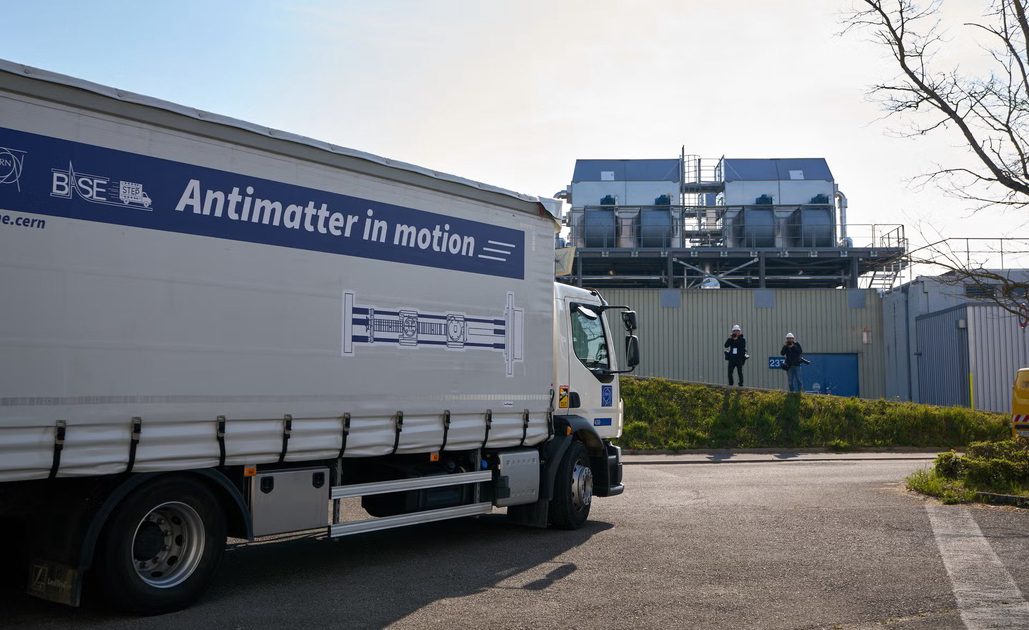
Picture yourself as a commuter near Geneva, gliding along impossibly smooth roads toward your shift at a chocolate or watchmaking factory. Suddenly you find yourself rolling up alongside a Volvo truck emblazoned with the deeply unsettling phrase "Antimatter in motion." Is this Swiss Star Trek? You'd be forgiven for immediately taking the nearest exit.
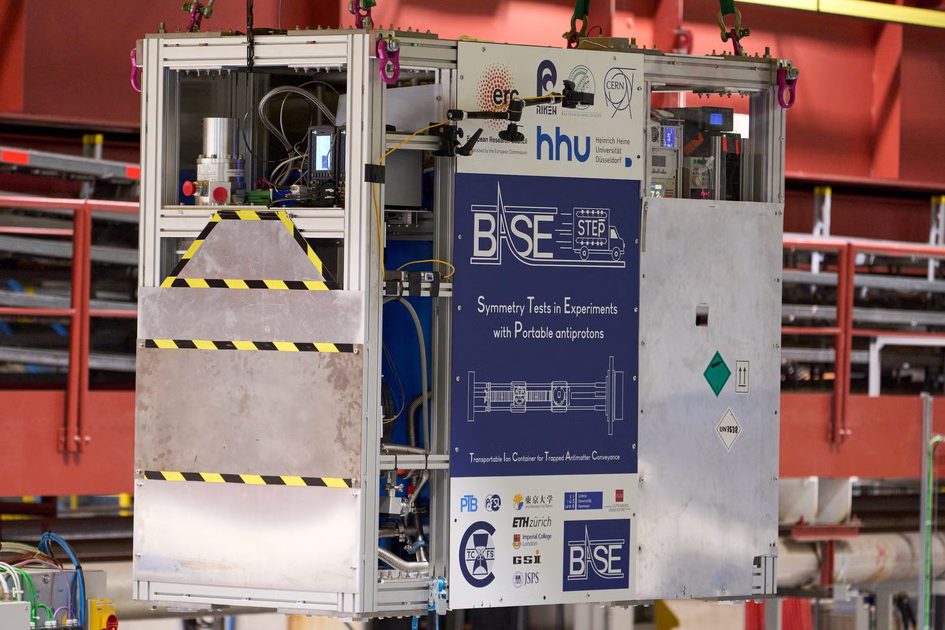
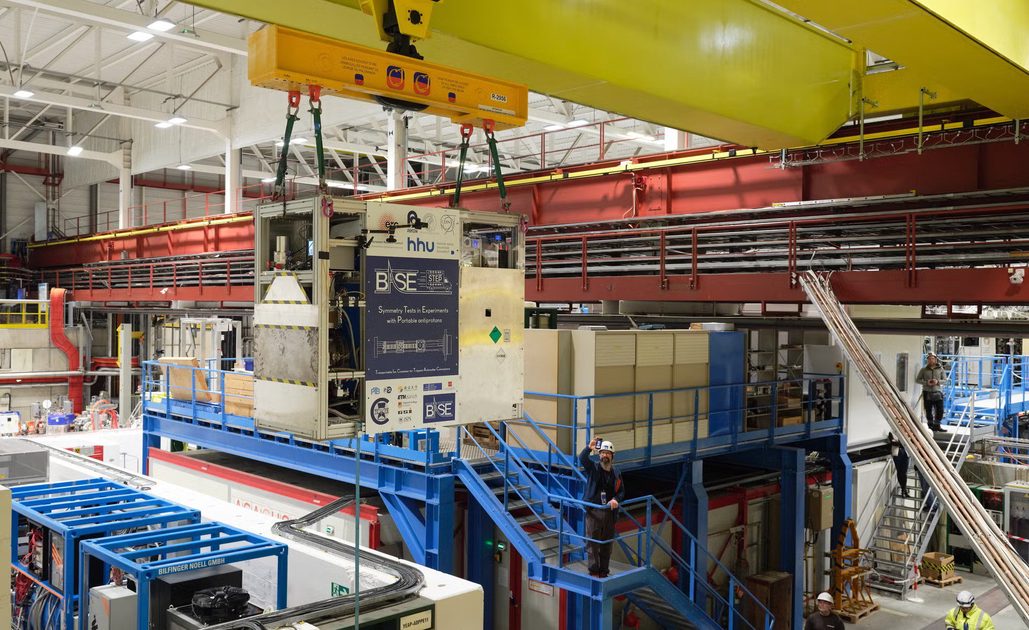
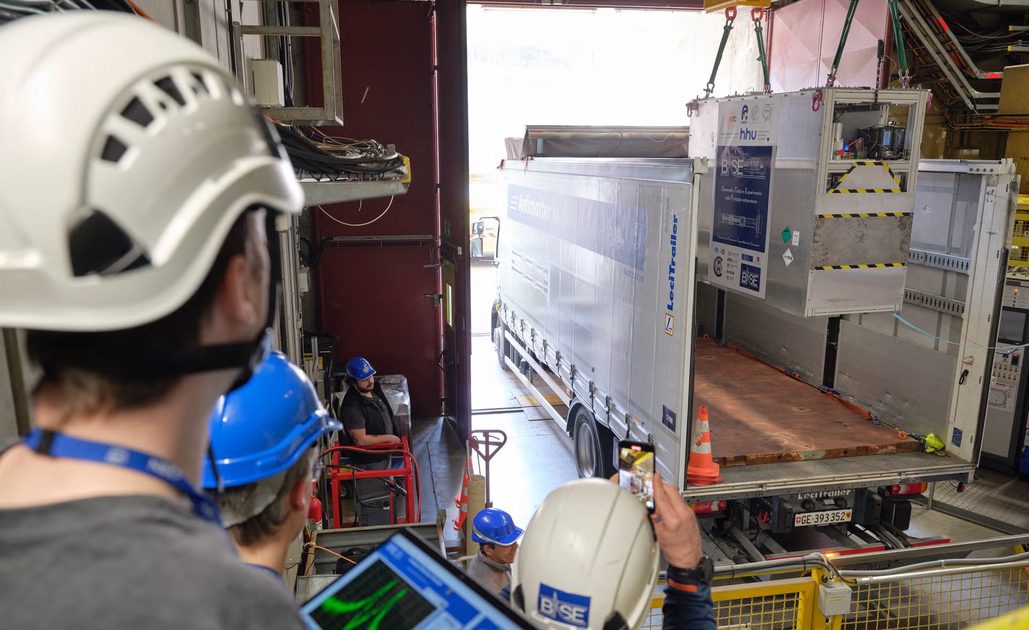
Yet that mind-bending scenario nearly materialized this week, when physicists at CERN transported 92 antiprotons on a 1.5-hour trip around their facilities. CERN — the European Organization for Nuclear Research — is the world's largest particle physics laboratory, dedicated to probing ever deeper into the fundamental structure of reality.
Antimatter has nothing to do with what the tow truck from Cars calls his mom's sister. It's the unstable, elusive mirror image of the material that makes up everything around us — the Earth, the solar system, and essentially the entire observable universe. Conceived in theoretical terms nearly a century ago, antimatter is defined as being identical to ordinary matter except that its electrical charges are reversed.
Researchers believe that practically no naturally occurring antimatter exists in the universe today, since nearly all of it annihilated itself during the Big Bang. And as you might guess, when a particle of antimatter encounters a particle of regular matter, the result is an explosion.
So what possessed scientists to load this stuff into a truck and drive it around? In part, for the same motivation that drives the key moment in Jurassic Park: to find out if they could. More practically, the ability to move antiprotons opens the door to producing them at CERN and shipping them to Germany's Heinrich Heine University Düsseldorf for additional experiments.
The cargo traveled inside a massive crate tipping the scales at over two thousand pounds — a container that sounds straight out of a Ghostbusters prop department. The antiprotons were held in a magnetic trap within an ultra-high vacuum environment, cryogenically chilled to suppress as much particle movement as possible.
Strictly speaking, the truck never actually ventured beyond CERN's expansive campus, so the bewildered Swiss commuter scenario hasn't played out yet. But with the proof of concept now established, an actual road trip transporting antimatter on the eight-hour drive to Düsseldorf seems increasingly likely in the near term.
Looking much further ahead, mastering the creation and storage of antimatter could be central to unlocking not just the secrets of the cosmos but the ability to traverse it. Just a few grams of antimatter would theoretically be enough to propel a spacecraft all the way to Jupiter. The catch is that producing antimatter is extraordinarily expensive — even pricier, as it happens, than premium gasoline in the Los Angeles area right now.
As understanding deepens, antimatter may become less exotic and more accessible. Given human nature, it seems almost certain that some distant spacefaring civilization will one day look back on this humble truck run as the very first step toward the stars. And somewhere in that far future, someone in their garage will be retrofitting a DeLorean DMC-12 to run on antimatter.





No notes on this sheet yet.