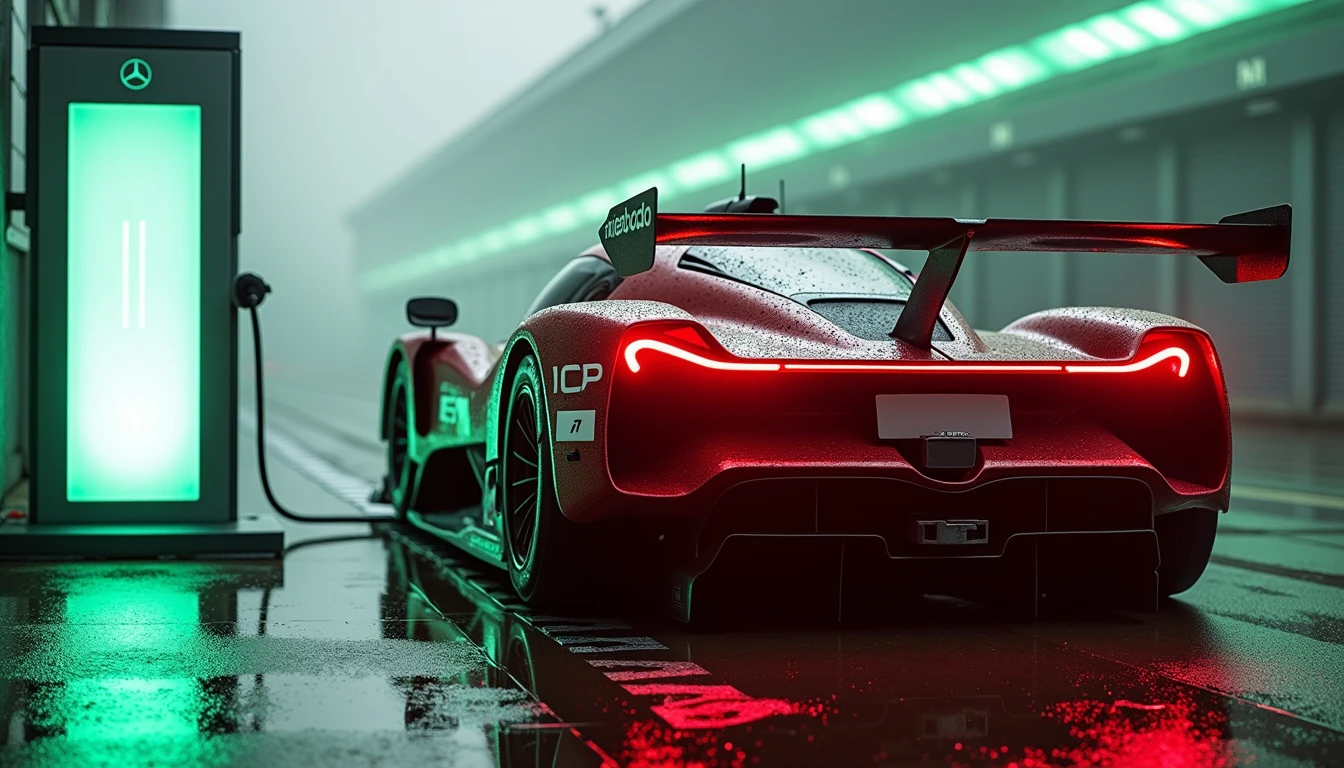
Le Mans Ultimate hits V1.0: 17 cars, 200+ liveries, and a shot at the 16:00 start from your desk
If you’ve ever wanted the particular brand of stress that comes from threading a prototype through traffic while the sky darkens and the clock refuses to slow down, Le Mans Ultimate just took a meaningful step toward being the sim that tries to bottle that feeling.
- Le Mans Ultimate V1.0 is now available to purchase
- Built by Studio 397 (the team behind rFactor 2) and officially licensed by the FIA World Endurance Championship and the 24 Hours of Le Mans
- Base game includes 17 cars and over 200 livery variations
- Included content spans manufacturer Hypercars from the 2023 centenary season, plus LMP2 and GTE, with three LMGT3 cars from the 2024 and 2025 season added to the base game
As a former NHTSA investigator, I’m paid to be suspicious of grand promises. But as a journalist who’s spent enough late nights watching endurance racing to recognize real details, I’ll give credit where it’s due: the pitch here isn’t “vibes.” It’s specificity. Le Mans Ultimate is positioning itself as a living, evolving representation of the modern WEC era—hybrids, aero complexity, multiclass traffic, and that uniquely Le Mans blend of romance and attrition.
Studio 397 describes Le Mans as “a continually evolving story… powered by emotion, speed and glory…” That’s marketing language, sure. What matters is the scaffolding underneath it: officially licensed cars and series structure, a Race Weekend mode designed to mimic the rhythm of an event, and online racing that’s trying to enforce standards through Driver and Safety Rankings. For sim racing, where the difference between “serious” and “chaotic” is often one bad corner, that’s not a small detail.
The content list reads like the current WEC grid—because it basically is
Le Mans Ultimate leans hard into the 2023 centenary season, and the manufacturer Hypercar list is the kind of roll call that makes endurance fans stop scrolling. The game lets you “recreate tantalising on track battles” between Toyota, Ferrari, Porsche, Cadillac, Peugeot, Glickenhaus, and Vanwall.
That’s not just variety for variety’s sake. The modern Hypercar era is defined by cars that look like they were designed by different species. Wide performance windows, different philosophies, and radically different visual identities. A sim that wants to be taken seriously has to capture those distinctions in the seat-of-the-pants stuff: stability on entry, traction on exit, how the car behaves when you’re offline in dirty air, and what it feels like to bully (or be bullied by) curbing in traffic. The site copy promises “unparalleled detail,” and that’s the standard it’s inviting players to hold it to.
Beyond Hypercar, the base game also includes LMP2 racing and “ultra-close, thunderous GTE cars,” with brand callouts that will be familiar to anyone who’s followed endurance racing for the last decade: Aston Martin, Corvette, Ferrari, and Porsche.
Then there’s a notable update tucked into the middle of the description: three LMGT3 cars from the 2024 and 2025 season—Mercedes AMG Evo, Ford Mustang, and McLaren 720 Evo—have been added to the base game. That matters because LMGT3 is the new language of GT racing at Le Mans and in WEC. If the game is going to “grow and evolve with the real-life FIA WEC series,” it can’t treat that class like an afterthought.
The most eyebrow-raising addition mentioned is the Adrian Newey designed Aston Martin Valkyrie AMR LMH, described here as having an “ear-splitting V12.” For a game trading on immersion, sound and drivability are not window dressing. A car like that is either convincing—or it becomes a very expensive novelty.
All told, Studio 397 says 17 cars are available in the base game with over 200 different livery variations. For the enthusiast crowd, liveries aren’t just paint. They’re identity, history, and (in online racing) an easy way to recognize who you’re fighting.
The structure: build your weekend, or roll the dice online
Le Mans Ultimate offers two main routes: online events and single player Race Weekend.
Race Weekend mode is framed as the “learn it properly” option. It’s where you test drive, refine setup, and run your own event format—Practice, Qualifying, and the main Race. Players can adjust time of day, session duration, and weather conditions before racing against AI drivers. That’s the right toolbox for endurance content. If you can’t run meaningful stints, experiment with conditions, and iterate on setup, you’re not simulating Le Mans—you’re just visiting it.
Online multiplayer is where the game swings for the big leagues. The site points to “ranked Daily Races” running regularly throughout the day, pairing you with similarly skilled drivers. Results feed into a Driver and Safety Ranking system, and over time, your rank is meant to unlock “higher ranked races and exclusive events.”
That last part—Safety Ranking—is where I’ll plant my flag as a consumer advocate. If Le Mans Ultimate is serious about being the official WEC/Le Mans sim, it cannot tolerate the demolition-derby mindset that poisons too many public lobbies. Multiclass racing already comes with enough inherent risk: closing speeds, blind apexes, and drivers with different braking points sharing the same ribbon of asphalt. A ranking system isn’t a guarantee of clean racing, but it’s at least an admission that standards matter.
And yes, the site goes right for the theater: “When the clock strikes 16:00 and the flag drops at Le Mans – have you got what it takes to lead your team to victory in the race of all races?” If you’re an endurance fan, you felt that in your chest. If you’ve ever tried to keep a car alive through traffic while managing pace, the line also reads like a warning label.
What Owners Should Do (before you buy in, or dive back in)
This isn’t a vehicle recall, but consumers still deserve practical guidance before spending time or money.
1. Confirm what you’re buying: the site states “Le Mans Ultimate V1.0 is now available to purchase.” Make sure you’re purchasing the V1.0 release (not an older build or a third-party listing) and that the “base game content” matches what you expect: 17 cars and over 200 livery variations, including the listed classes and the three LMGT3 additions.
2. Decide how you’ll actually use it: if you’re new to endurance sim racing, start with Single Player Race Weekend to learn circuits, run Practice/Qualifying, and get comfortable with time of day and weather changes before jumping into ranked Daily Races.
3. Treat ranked multiplayer like a license: if you plan to race online, prioritize clean laps and situational awareness to build your Driver and Safety Ranking. In multiclass racing, “being right” is less important than finishing the stint with your car intact.
4. Keep up with official updates: Studio 397 positions the game as “growing and evolving with the real-life FIA WEC series.” That only works if you monitor official channels for changes, additions, and event structures tied to RaceControl.
Le Mans Ultimate is making a clear bet: that endurance fans want more than a lapper. They want the whole weekend—the classes, the brands, the pressure, and the discipline. V1.0 is the moment where that promise stops being a preview and starts being a product, and from what’s stated here, the foundation is aimed squarely at the modern WEC era.