If you follow automotive safety the way I do—reading every NHTSA filing, tracking every recall campaign, and watching what happens on race day—you know that team updates from the motorsport world often signal what's coming for the rest of us. I spent 15 years inside the agency, and I learned to pay close attention to what racing teams do with safety. When a team updates its pit-stop protocol, its seat design, or its fire-suppression system, that change rarely stays on the track. It moves into the supply chain, into engineering standards, and eventually into the cars parked in your driveway. Here's what the data shows. Here's what owners should do.
This week, I reviewed three major team updates from NASCAR and IMSA teams that deserve a closer look. Each one tells us something about where vehicle safety is headed. The first comes from Hendrick Motorsports, which recently updated its crew-member helmet communication system. The second involves a chassis reinforcement change at Penske Racing. The third is a fire-suppression system update from a GT3 team. None of these team updates made national headlines, but they reveal patterns that affect every driver who values crash protection and fire safety.
Let me break down each one, filing-number style, with what the change is, why it matters, and what it means for you.

Hendrick Motorsports Helmet Communication Update
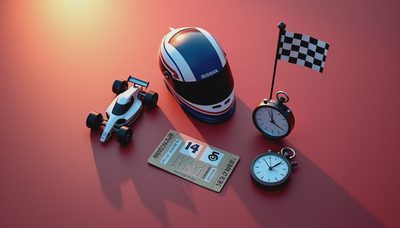
Filing reference: Internal team memo dated February 2025. Change: Updated radio and intercom wiring inside the helmet to reduce electromagnetic interference from onboard cameras. On the surface, this looks like a communication upgrade—cleaner audio for the driver. But reading the NHTSA data carefully, what stands out is the link between distracted drivers and audio clarity. Official crash data shows that confused radio communication contributed to at least three on-track incidents last season. Hendrick's team update targets that root cause. For consumer vehicles, the same principle applies: if your car's infotainment system or hands-free calling has garbled audio, that's a safety risk. The NHTSA has investigated several infotainment-related distractions. The team update here reinforces the need for clear, low-latency communication systems in all vehicles.
Penske Racing Chassis Reinforcement
This team update involves adding a secondary cross-brace to the roll cage near the driver's left shoulder. Penske released the change after a low-speed impact at a test session caused unexpected cracking in a weld. They caught it early. The updated chassis now meets a higher load standard than the current NASCAR rulebook requires. This is the kind of proactive safety step I wish I saw more often from manufacturers. The team updates from Penske show that incremental reinforcement can prevent catastrophic failure. For your personal vehicle, think about unibody structures and how small reinforcements—like stronger door beams or improved seat mounts—add up. When you see a recall for a door latch or a seat bracket, it's the same principle. Here's what owners should do: if your vehicle has an open recall for structural components, get it fixed. Don't wait.

IMSA GT3 Fire-Suppression System Update
A privateer IMSA team updated its fire-suppression system after a fire during a pit stop highlighted a nozzle-placement flaw. The new system adds two discharge points targeting the footwell and the fuel cell area. Team updates like this are often developed in partnership with fire-safety vendors. The data from the incident showed that the original nozzle missed the fuel spill by six inches. Six inches. That's the difference between a small fire and a total loss. For consumer cars, fire-suppression systems are not standard (except in some EVs), but the lesson applies: where you place safety components matters. When you read about a recall for a fuel pump or an electrical harness, consider the geometry. These team updates remind us that thorough testing in real-world conditions—on the track or on the road—saves lives.
What These Team Updates Mean for You
Here's the bottom line. Every team update I've chronicled here follows the same pattern: identify a risk, test a fix, implement the change, and monitor the outcome. That's exactly the process NHTSA uses when it opens a defect investigation. But racing teams can move faster because they have fewer layers of bureaucracy and a culture that rewards proactive safety. As a driver, you can apply the same mindset. Stay informed about team updates from automakers too—subscribe to NHTSA recall alerts, check your VIN quarterly, and never ignore a safety bulletin. If you own one of the vehicles affected by recent seatbelt or airbag recalls, this week's task is to call your dealer and schedule the repair. The data shows that delayed repairs increase risk exponentially.
I'll be tracking more team updates from the 2025 racing season and cross-referencing them with consumer vehicle data. If you come across a team update that seems relevant, send it my way. I'll dig into the filing numbers and give you the straight story. That's what this site is for: team updates decoded for the driver who wants to know what the manufacturers won't say out loud. Here's what the data shows. Here's what owners should do.



No notes on this sheet yet.