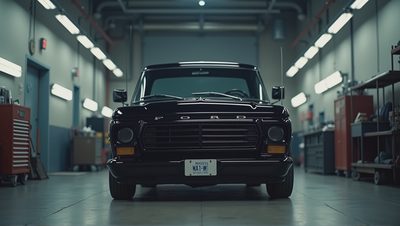
An international pickup truck is one of the most characterful classic vehicles you can buy. But before you hand over cash at a car show, understand what you're actually getting into. International Harvester built these light-duty trucks for decades, and while they have plenty of charm, they also come with safety gaps that look alarming from a modern perspective. Here's what the data shows, and here's what owners should do.
A Short History of International Harvester Pickups
International Harvester got into the pickup game in the early 20th century, offering trucks for farms and small businesses. By the 1950s and 1960s, the company's light line included the 100 series, the 1100, and later the 1200, and these trucks became a staple of rural America. They were simple, body-on-frame designs with ladder frames and leaf springs, built to haul heavy loads on rough roads. The last true IH badged pickup rolled out in 1975, but the brand still has a devoted following. For collectors, an international pickup truck from that era represents straightforward, repairable engineering.
What the Safety Data Shows About These Trucks
As a former NHTSA investigator, I've read thousands of crash test reports and defect filings. When you look at a vintage international pickup truck, the absence of modern crash protection becomes obvious. Seat belts were optional until 1968, and shoulder belts weren't standard until the 1970s. Many International pickups have lap-only belts, if they have belts at all. There are no airbags, no crumple zones, and no collapsible steering columns. The three-point seatbelt, the single most effective safety device in automotive history, is absent from almost every early model.

The frame and fuel system also raise concerns. Rust can eat away at boxed frame rails, and fuel tanks on some models sit behind the rear axle, where a rear impact can be catastrophic. The NHTSA investigated similar fuel tank placement issues in other pickups decades ago. For an international pickup truck, you need to inspect the frame rails, the cab mounts, and the brake lines before you even think about driving it.
To be clear, there are no crash test ratings for these trucks because the NHTSA only began frontal crash testing in 1978. As a result, you won't find a star rating for a 1968 International. You have to rely on common sense and a thorough inspection.
What Owners Should Do Before Buying
If you're serious about ownership, take three concrete steps. First, schedule a professional mechanical inspection, and specifically ask about frame rust and prior collision repair. Second, replace any original seat belt assemblies with modern three-point belts from a reputable supplier; this is a straightforward retrofit on most International trucks. Third, check the fuel lines and tank for leaks and consider upgrading the braking system, because original drums can fade after a hard stop. If you own one of these vehicles, this week's task is to verify that the VIN matches the title and that the frame hasn't been patched with sheet metal.
For anyone considering an international pickup truck, the key is to treat it as a classic vehicle, not a daily driver. That mindset affects your insurance choices, your maintenance schedule, and your expectations behind the wheel. Your insurance company will see it that way too, so you need a policy that matches the way you actually use it.
Remember, a vintage truck is not a commuter. It's a weekend driver, a show piece, and sometimes a workhorse. The more carefully you define its role, the easier it is to insure and maintain.

Insurance Costs for an International Pickup Truck
Now let's talk money. Classic truck policies from insurers like Hagerty or Grundy typically work on agreed value, not actual cash value. That matters because a restored international pickup truck can be worth $20,000 to $40,000 depending on model and condition, while a project truck might only be worth $5,000. With agreed value, you and the insurer set a number up front, so you don't get hit with a lowball if it's totaled. For most vintage pickups, premiums run between $200 and $600 a year for comprehensive and collision coverage, far less than a daily driver. But not every standard auto insurer will cover an international pickup truck as a classic; some will only offer liability. That's why you should compare quotes from specialty insurers as well as mainstream companies like Progressive or State Farm.
Start by getting a stated value quote from at least two specialty insurers. Then run a standard auto insurance quote on the same truck through an online comparison tool. The difference can be surprising. Some daily-driver policies will only pay actual cash value, which for a 50-year-old truck might be a few thousand dollars, even after you've spent $30,000 on restoration. An agreed-value policy from a specialty insurer reflects the true market value, so you're not underinsured when it matters most.
The Bottom Line
An international pickup truck is a rewarding project, but it's also a vehicle that demands respect. Here's the pattern I've seen in defect data over fifteen years: old trucks fail in predictable ways, and the failures are almost always related to neglect. Rust, degraded rubber, and outdated restraint systems are not cosmetic issues. They're safety issues. If you own one, get it inspected, upgrade the belts, and make sure your insurance actually covers the value you've put into it. Then enjoy it. Just don't forget that you're driving a machine with the body structure of a building.
Before you buy, compare insurance quotes online. A few minutes of research can save you hundreds each year.


No notes on this sheet yet.