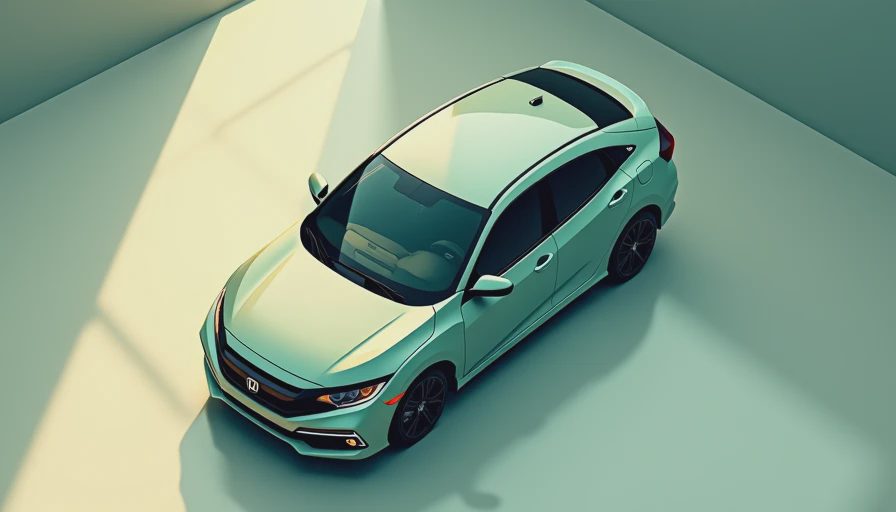
The Honda Civic Hatchback earns its place on short lists because it solves a simple problem: most drivers want something easier to park than an SUV, more useful than a sedan, and less thirsty than a crossover. If you are looking at one, the first things I would inspect are the hatch opening, rear-seat access, tire wear, and the equipment that changes daily life, such as blind-spot monitoring, adaptive cruise control, and a good infotainment screen. The Honda Civic Hatchback can be a smart buy, but only if the trim, price, and service history line up with how you actually drive.
Why the Honda Civic Hatchback keeps drawing cross-shoppers
The appeal starts with packaging. The cargo area is useful without making the car feel bulky, and the liftback shape swallows groceries, a folded stroller, a couple of suitcases, or a weekend run to the home center with less drama than a traditional trunk. In most recent versions, the rear seats fold flat enough to make the car surprisingly practical for a compact. That matters if you are comparing it with a Toyota Corolla Hatchback, Mazda3 hatchback, or Subaru Impreza. Each has a following, but the Honda usually wins on the blend of cabin room, resale reputation, and everyday ease.
I also pay attention to visibility and steering feel. A hatchback that is easy to place in traffic is worth real money in a dense commute, even if nobody puts that line on a window sticker. On the ownership side, fuel economy, insurance, and tires matter more than brochure horsepower. A driver who logs 12,000 miles a year can spend several hundred dollars less over time by choosing a compact that does not ask for premium fuel or oversized rubber.
For shoppers who plan to keep the car five to seven years, that practical edge matters more than a lot of styling talk. A clean, well-maintained example can be a better long-term proposition than a bigger vehicle with more features but higher running costs.
Safety features, recalls, and the VIN check that matters for the Honda Civic Hatchback
Reading a sales listing is not enough. The Honda Civic Hatchback generally benefits from Honda Sensing driver-assist features, and on many trims that means forward collision warning, automatic emergency braking, lane keeping assistance, and adaptive cruise control. Higher trims add comforts like heated seats, better audio, and more camera angles, but the real safety work starts before the test drive.
Here is the step I never skip on a used car: run the VIN through NHTSA.gov and check for open recalls. It takes a minute, costs nothing, and can save you from buying a car that still needs a software update, airbag repair, or some other fix the seller forgot to mention. If the vehicle has had windshield work, a battery replacement, or a body repair, ask for the invoices. Camera calibration, sensor alignment, and service records tell you more than a glossy detail job.
If the seller cannot explain recent work in plain language, treat that as a warning sign. A clean Carfax report is helpful, but it is not a substitute for the actual maintenance trail. I want to see evidence of oil changes, brake service, tire rotations, and any dealer repairs that closed a campaign. That is the difference between a car that was merely driven and one that was cared for.
Trims and price math for the Honda Civic Hatchback
The Honda Civic Hatchback usually lands in a price band that makes sense for shoppers who do not want to jump straight into an SUV payment. New versions often start in the upper $20,000 range and climb into the low $30,000s once you add hybrid powertrains, premium audio, leather, or more advanced convenience gear. On the used market, recent model years can swing from the high teens to the upper $20,000s depending on mileage, trim, color, and whether the car came with a clean service file.
That spread matters because the right trim can save you money twice. A lower trim with the options you actually use may be a better deal than a top trim loaded with features that look good on a window sticker but do not change your commute. For example, if you care about fuel savings and stop-and-go commuting, a hybrid version may justify its higher purchase price. If you care more about simplicity and long-term repair comfort, a lower trim with fewer electronic extras can be easier to live with.
Running costs are still reasonable, but not zero. A normal oil change can land around $50 to $90 at an independent shop. A quality set of all-season tires may cost $700 to $1,000 installed. Brakes, alignment work, and a battery replacement all sit in the normal compact-car range, which is one reason the model stays popular with budget-conscious households.
What owners should do before buying or financing a Honda Civic Hatchback
Here is the data shows. Here is what owners should do. First, verify the VIN and look for open recalls. Second, inspect the tires for uneven wear, because that can hint at curb strikes, bad alignment, or neglected rotations. Third, test every electrical feature in one sitting: screen response, backup camera, USB ports, heated seats, keyless entry, and the hatch release. If anything glitches during a short drive, assume the car will not get better after you sign.
Then look at the money side. If you are financing, get a quote from your bank or credit union before you visit the dealer. That gives you a real benchmark against the monthly payment pitch. Also ask about dealer-installed accessories, because a $300 wheel lock package or a $900 coating package can quietly change the deal. A buyer who is focused on the total out-the-door number usually does better than one who only chases the lowest advertised payment.
For families and commuters, the Honda Civic Hatchback remains a strong default because it is easy to park, easy to load, and easy to recommend when it has a clear record. If you want a compact that covers daily driving without feeling stripped down, the Honda Civic Hatchback is still one of the smartest places to start.


No notes on this sheet yet.