
I spent 15 years inside NHTSA investigating defects, and one thing I learned is that vehicle safety ratings are only as useful as your understanding of what they actually measure. Whether you're shopping for a new SUV or checking whether your sedan holds up in a crash, these ratings are your first line of defense. But they're also easy to misinterpret. Here's what the data shows and how you should use it.
The Two Main Rating Systems
In the U.S., two organizations set the standard for vehicle safety ratings: the National Highway Traffic Safety Administration (NHTSA) and the Insurance Institute for Highway Safety (IIHS). NHTSA operates under federal authority and gives 1-to-5-star ratings for frontal crash, side crash, and rollover resistance. IIHS is a nonprofit funded by insurers and rates vehicles as Good, Acceptable, Marginal, or Poor across multiple tests. Both publish ratings for most new models, but they test differently. Understanding those differences is key.
What NHTSA's Star Ratings Actually Measure
NHTSA's 5-star rating system is designed to compare crashworthiness across vehicles of similar weight and size. The frontal crash test involves a head-on collision into a fixed barrier at 35 mph. The side crash test simulates a T-bone impact from a moving barrier. The rollover resistance test measures a vehicle's center of gravity and stability. A 5-star rating means the risk of injury in that specific crash mode is low — but it doesn't guarantee safety in every real-world scenario. For example, a small car with 5 stars can still be at a disadvantage in a crash with a large SUV.

IIHS Ratings: Beyond the Stars
IIHS goes a step further with tests that NHTSA doesn't require, including the small overlap frontal test (where only 25% of the front end hits a rigid barrier) and headlight evaluations. A vehicle can earn Top Safety Pick+ only if it gets Good ratings in all crash tests and has Acceptable or Good headlights across all trims. This matters because headlight performance varies wildly by trim level — base models often get worse lights. When I read through IIHS data, I always check which trim was tested. If you're eyeing a car with a Top Safety Pick award, make sure the trim you're buying was the one that earned it.
Why Ratings Don't Tell the Whole Story
Here's where things get tricky. Vehicle safety ratings are based on tests at specific speeds under controlled conditions. They don't account for factors like driver age, vehicle weight differences, or the likelihood of a crash in the first place. A car with 5 stars might still have a higher fatality rate if it's driven by an inexperienced teen. Also, ratings can lag behind production changes — if a manufacturer makes a structural update mid-model-year, the rating may not reflect it until the following year. I've seen cases where a 2023 model had different crash performance than a 2022 simply due to a hidden reinforcement change. Always check the rating for the exact model year you're buying.
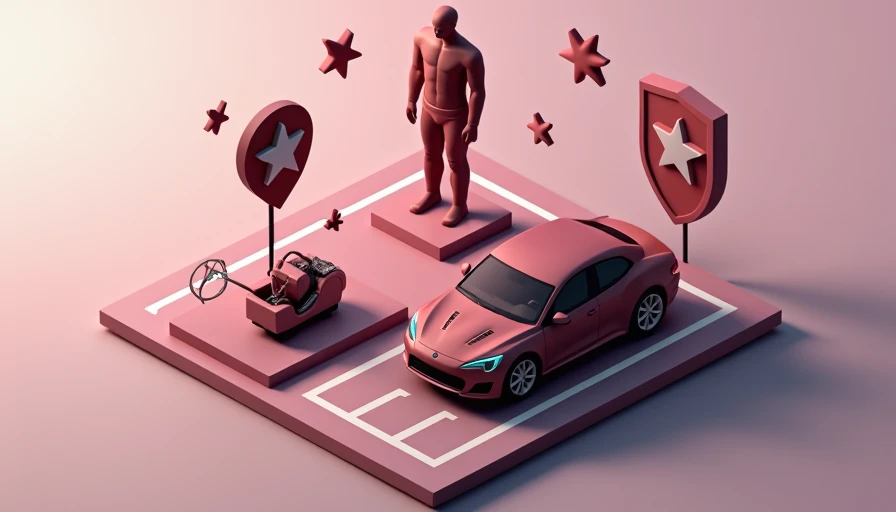
How to Use Safety Ratings When Shopping
Start by visiting NHTSA's and IIHS's official sites. Look for the specific make, model, and model year. Pay attention to footnotes — they often indicate that optional equipment (like side curtain airbags) was installed for the test. If that equipment is optional on the real car, the rating might not apply to base models. I recommend narrowing your list to vehicles that earn 5 stars from NHTSA and at least Top Safety Pick from IIHS. Then, for your final handful of candidates, check the NHTSA's Complaint database to see if owners report issues like seat belt failures or airbag misdeployments that don't show up in crash tests.
Common Misconceptions About Vehicle Safety Ratings
One myth is that a five-star NHTSA rating means a car is safer in all crashes. In reality, the star system is designed for comparisons within weight classes. A subcompact with five stars is still less protective in a collision with a full-size pickup. Another misconception is that IIHS's Top Safety Pick+ guarantees the best headlights on every trim. That's not always true—some models offer adaptive headlights only on higher trims. For example, the 2024 Honda Accord had Good-rated headlights on the Touring trim but Acceptable on the base LX. If you buy the base trim, you aren't getting the same safety benefit. Also, don't assume an older model year with the same rating as a newer one is identical. Manufacturers sometimes make structural changes mid-cycle without updating the rating. That's why I always advise buyers to check the specific model year's data, even if the car looks the same as last year's. Finally, remember that safety ratings don't measure crash avoidance features. A car with excellent vehicle safety ratings might lack automatic emergency braking, which IIHS now requires for the top award. That's why vehicle safety ratings should always be considered alongside other factors like date of manufacture and optional safety packages.
What Owners Should Do
If you already own a car, don't panic if its vehicle safety ratings are less than perfect. Understand its limitations: if it's a small car, drive defensively and avoid aggressive lane changes at high speed. If it has only 4 stars for rollover, avoid roof loads and drive within the recommended weight limits. And always check for open recalls — even a highly rated car can have a hidden defect. Here's my three-step task: this week, look up your car's ratings on NHTSA.gov, search for any recalls using your VIN, and ensure your headlights are properly aimed. That's actionable protection, straight from the data.


No notes on this sheet yet.