The phrase tesla driverless delivery fire lane combines three issues that should never be treated casually: automated driving claims, unattended vehicle movement, and blocked emergency access. If a Tesla is left in a marked fire lane while a delivery is completed, the central question is not whether the car looks futuristic. It is whether the vehicle created a predictable hazard and who had control at that moment.
I have investigated enough vehicle safety complaints to know that dramatic language often arrives before the evidence. “Driverless” can mean several different things, from a remote demonstration to a vehicle using a driver-assistance feature while a human remains responsible. Tesla vehicles sold in the United States are not generally approved as fully autonomous cars that can operate without an attentive driver in ordinary public traffic. That distinction matters when assessing a reported tesla driverless delivery fire lane event.
Start with the fire lane, not the marketing claim
A fire lane exists to preserve access for fire trucks, ambulances, and other emergency responders. Local fire codes and property rules commonly prohibit parking or stopping there, although the exact signage, enforcement authority, and penalties depend on the jurisdiction. A delivery driver cannot convert that space into a legal loading zone simply because the stop lasts two minutes.
The practical danger is easy to understand. A fire engine may need a clear approach to a building entrance, hydrant, sprinkler connection, or apartment access road. A vehicle occupying that corridor can force responders to reposition, unload equipment farther away, or approach from a less effective angle. Seconds and access distance matter during a structure fire.
A Tesla using a parking or summon feature does not change that analysis. Driver-assistance software can help with steering, speed, or maneuvering, but the person who activates it remains responsible for choosing a lawful and safe location. A property owner should document the lane markings, signs, time of day, and vehicle position rather than relying on a social media caption.
What “driverless” may actually mean
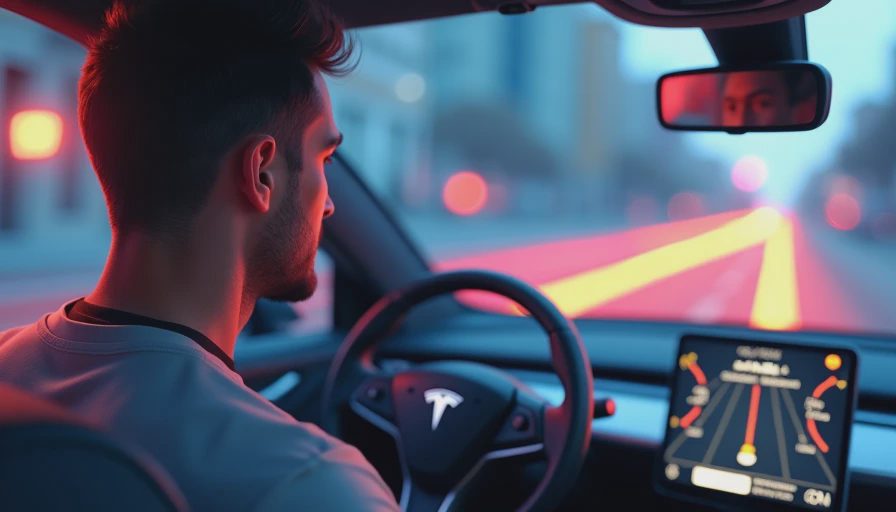
When reviewing a tesla driverless delivery fire lane claim, I would first identify the feature involved. Tesla’s Full Self-Driving technology is marketed as a driver-assistance system that requires active supervision. The name can create confusion, but it does not make the vehicle an unsupervised commercial delivery robot. Basic Autopilot features also require an attentive driver and are not designed to authorize stopping in restricted areas.
A different possibility is Summon or a similar low-speed maneuvering function. In that situation, a driver might move the car from a phone or key while standing nearby. That may look driverless on video, but remote operation is not the same as a vehicle independently deciding where to park. The investigation should ask who initiated the movement, whether the driver could stop it, and whether the system recognized the fire lane.
There is also a simple explanation: the driver could have parked, walked away, and returned later. A short clip may omit the person who was in control. Before treating a post as proof of an autonomous safety failure, preserve the original video, its timestamp, the location, and any available witness statements. Do not infer a confirmed defect from appearance alone.
Evidence that can establish responsibility
A useful record starts with photographs taken from several angles. Capture the curb paint, pavement lettering, signs, entrances, hydrants, and the distance between the Tesla and the nearest building access point. Note whether the car was occupied, charging, loading packages, or moving under remote control. Security-camera footage can establish how long the vehicle remained in place and whether an employee or driver was nearby.
The vehicle’s owner should save relevant app notifications, dashcam footage, and service messages without editing them. If the car made an unexpected movement, write down the command used, the approximate battery level, cellular connection, and any warning displayed on the screen. That information is more useful than a general statement that “the car drove itself.”
For an actual collision, blocked response, or injury, contact the property manager and appropriate local authorities. A fire department incident report, police report, tow record, or insurance claim can create a dated record. Do not confront a driver in an unsafe setting, and do not enter a travel lane to film a moving vehicle.
Insurance questions after a blocked-lane incident
Auto insurance generally follows the policy terms and the facts of the loss, not the vehicle’s branding. Liability coverage can respond when an insured driver is legally responsible for property damage or injuries. If a Tesla strikes a gate, another car, or a person while maneuvering, investigators will examine control, warnings, visibility, and the driver’s actions.
Collision coverage is the part of a typical policy that can help repair the insured vehicle after a crash, subject to the deductible. Comprehensive coverage generally addresses non-collision losses such as theft, hail, vandalism, or falling objects. Neither coverage automatically excuses an illegal stop in a fire lane, and neither guarantees payment for every dispute involving autonomous or remote features.
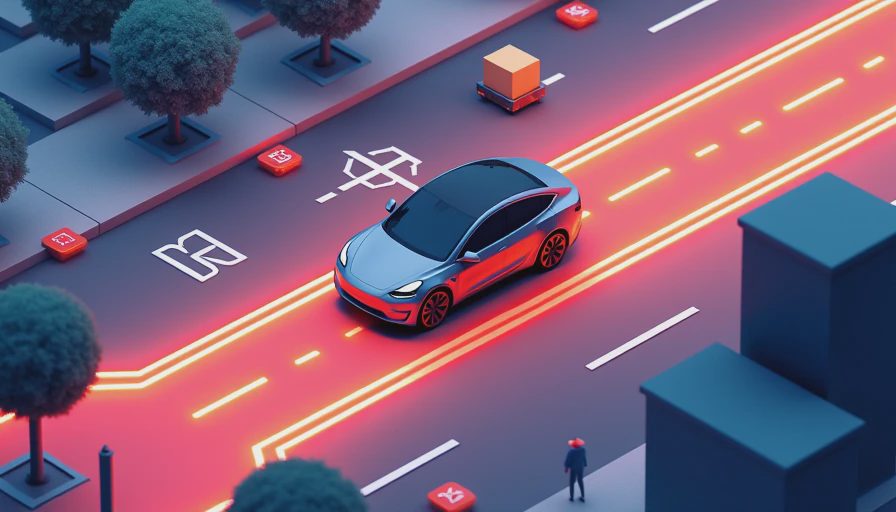
A claim can become complicated if a delivery company, contractor, property owner, or software allegation is involved. Insurers may seek video, vehicle data, witness accounts, and maintenance records. If the loss is serious, preserve all communications and avoid guessing about fault in a recorded statement. A policyholder should report the incident promptly and describe observable facts: where the vehicle was, what it contacted, how it moved, and who was present.
What owners and property managers should do
If you own the Tesla, your immediate task is straightforward: do not use a fire lane for pickup, drop-off, package transfer, or remote maneuvering. Select a legal loading area, remain attentive, and keep the vehicle under direct control. Review the owner’s manual and current feature instructions before using Summon or other automated functions. Software capability is not permission to ignore traffic controls or private-property rules.
If you manage the property, make the lane unmistakable. Fresh pavement markings, readable signs, lighting, and enforcement reduce the argument that a driver did not understand the restriction. Establish a delivery area away from emergency access, tell vendors where it is, and preserve camera footage when a violation occurs. Towing policies should follow local law and posted notice requirements rather than improvisation.
For a safety complaint involving an unexpected vehicle action, report the facts to NHTSA through its vehicle safety complaint system. Include the vehicle identification number if available, the date, software version if known, location, photos, and any injury or property damage. A complaint is not a finding of defect, but consistent, well-documented reports help investigators identify patterns.
The conclusion the evidence supports
The words tesla driverless delivery fire lane should not be used as a shortcut to declare a confirmed autonomous-vehicle defect. They describe a fact pattern that requires careful separation of the parking violation, the technology involved, and the person responsible for the vehicle. A video can start an inquiry, but it cannot answer every question.
Here is what the data shows. A fire lane must remain available regardless of whether a Tesla is parked by a human, moved through a phone app, or operating with driver assistance. Here’s what owners should do: keep emergency access clear, save evidence after an incident, notify the insurer promptly, and report credible safety concerns with specific details. The safest delivery is the one that never obstructs the people who may need that lane in an emergency.

No notes on this sheet yet.