
If you've shopped for a new car lately, you've probably heard the term—but what is level 2 autonomous driving really? As someone who spent 15 years investigating vehicle safety defects at NHTSA, I've seen the marketing spin and the real-world data. Let's cut through both.
Level 2 autonomy means the car can simultaneously control steering and acceleration/deceleration, but the driver must remain fully engaged and monitor the driving environment at all times. Think of it as an advanced cruise control with lane-centering. The system can handle highway driving under ideal conditions, but it's not self-driving. The moment conditions degrade—sharp curves, construction zones, bad weather—you're expected to take over instantly.

How Level 2 Differs From Level 1 and Level 3
To understand what is level 2 autonomous driving, you need context. The SAE International standard J3016 defines six levels, from 0 (no automation) to 5 (full autonomy). Level 1 handles one function—like adaptive cruise control or lane keeping, but not both simultaneously. Level 2 combines those two functions. Level 3 is where the car can drive itself under limited conditions and you can take your eyes off the road, but you must be ready to intervene when prompted. As of 2025, no production vehicle offers true Level 3 in the U.S. (Mercedes-Benz has it in Germany with the S-Class and EQS, but regulatory hurdles remain here.)
So when you ask what is level 2 autonomous driving, remember: you are legally and functionally the driver at all times. The system is a co-pilot, not a pilot.
Real-World Examples: Autopilot, Super Cruise, and ProPILOT
Several automakers offer Level 2 systems, and they vary widely in capability and safety engineering. Here are the most prominent:
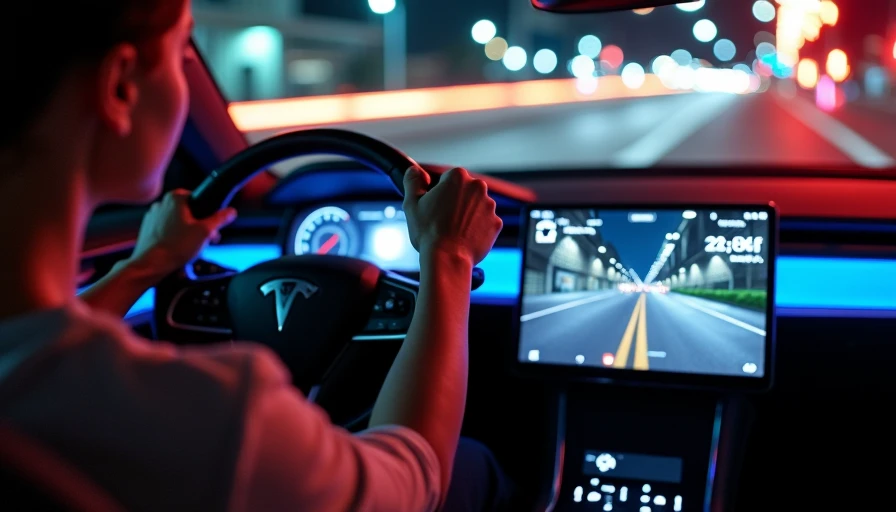
- **Tesla Autopilot** (standard on all new Teslas): Combines traffic-aware cruise control with Autosteer. It works well on well-marked highways but has been linked to a disproportionate share of crashes, according to NHTSA investigations (Office of Defects Investigation PE21020). The key issue: Tesla relies on camera-only perception and has been criticized for allowing hands-off use for too long before warnings escalate.
- **GM Super Cruise**: Available on Cadillac, GMC, and Chevrolet models. Uses driver-facing cameras to ensure your eyes are on the road. It's more conservative than Autopilot—no lane changes without driver confirmation in older versions—and operates only on mapped divided highways. GM has accumulated billions of miles of data and has a strong safety record.
- **Nissan ProPILOT Assist**: A more modest Level 2 system that works on highways and some secondary roads. It's less aggressive and requires constant driver steering input. It's a good system for reducing fatigue, but it won't make sharp turns or handle complex interchanges.
Each system is different, but the fundamental answer to "what is level 2 autonomous driving" remains the same: the car helps, but you're in charge.
Safety Concerns and Regulatory Oversight
I spent years investigating defects in systems like these. The common thread: drivers over-rely on them. NHTSA data shows that in crashes involving Level 2 systems, the driver was often engaged in a secondary task—using a phone, eating, even sleeping. The technology is not foolproof; it can miss stationary vehicles, emergency vehicles, or debris in the road. A 2022 study by the Insurance Institute for Highway Safety (IIHS) found that many Level 2 systems struggle to maintain safe following distances or respond appropriately to cut-ins.
Regulation is still catching up. NHTSA has issued standing general orders requiring automakers to report crashes involving Level 2 systems, and it has opened multiple defect investigations. The new FMVSS No. 127 rule will eventually require automatic emergency braking on all passenger vehicles by 2029, but there's no federal standard yet for what Level 2 systems must do in edge cases.
What Drivers Should Know Before Using Level 2 Systems
If you're considering a car with Level 2 autonomy, here's practical advice:
- **Read the owner's manual.** I know it's boring, but each system has specific limitations. For example, some systems disengage below 45 mph; others won't work on unlit roads at night.
- **Keep your hands on the wheel and eyes on the road.** Even if the system allows brief hands-free operation (like Super Cruise), stay ready. In my NHTSA days, I saw crash videos that haunt me.
- **Update the software.** Automakers frequently release over-the-air updates that improve system performance and fix known bugs. A system that's two years out of date may not handle scenarios the current version can.
- **Don't overestimate the system.** No Level 2 system can handle snow-covered lanes, construction cones, or a mattress falling off a truck. The marketing may say "Autopilot," but it is not.
So, what is level 2 autonomous driving? It's a useful tool, not a magic carpet. Treat it like an experienced co-driver—one who can handle the interstate in good weather, but who needs you to take the wheel when things get tricky. Here's what the data shows: Level 2 can reduce fatigue and improve safety when used correctly. Here's what owners should do: stay alert, stay informed, and never hand over full control.
*— Tom Hargrove, Pedal Diaries*


No notes on this sheet yet.