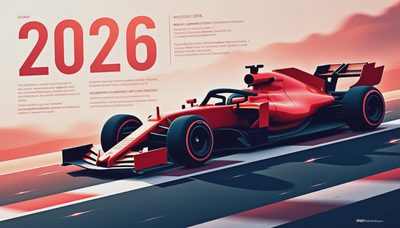
The **Max Verstappen 2026 contract** story gets attention for an obvious reason: when the grid is heading into a major rule change, one elite driver can reshape the market overnight. In Formula 1, contract news is never just about salary or team loyalty. It is about technical direction, engine confidence, internal stability, and whether a driver believes the next regulation cycle will produce a title-caliber car. Here's what the data shows. Here's what fans should do: separate confirmed facts from paddock noise and watch the indicators that matter.
What is confirmed about Verstappen's current position
The starting point is simple. Verstappen has been publicly tied to Red Bull on a long-term deal that runs deep into the decade, and that matters because a signed agreement is not the same thing as an open seat. When people search **Max Verstappen 2026 contract**, they are often really asking whether 2026 is a realistic exit point, leverage point, or reset year. Those are different questions.
Reading the situation carefully, what stands out is that 2026 aligns with the biggest technical change in the sport: new chassis and power unit regulations. That creates pressure on every top driver to reassess competitive risk. A driver does not just ask, "Am I happy here?" The real question is, "Who is most likely to build the quickest and most reliable package under the next rules?" That is why contract language, performance clauses, and leadership stability suddenly matter more than casual headlines suggest.
For now, the strongest evidence is still that Verstappen remains connected to Red Bull unless a meaningful trigger changes the equation. That is not rumor control. It is simply the most defensible reading of the public record.
Why 2026 matters more than a normal contract year
A normal Formula 1 contract cycle revolves around seats, sponsors, and timing. The **Max Verstappen 2026 contract** conversation is bigger because 2026 is not a normal year. It is the launch point for new regulations, including major power unit changes that could reset the running order. In plain terms, a dominant team can look ordinary after a rule shift, and a team that has been chasing can suddenly look very smart.
That is why top drivers and team principals start planning early. Engine partnerships, simulator development, staffing continuity, and wind tunnel priorities all feed into confidence. If I were assessing this as an investigator rather than a fan, I would look at four signals: the strength of Red Bull's internal leadership, the competitiveness of its future power unit program, Verstappen's public tone, and whether rival teams create credible openings.

Mercedes naturally enters this discussion because it has a history of building strong regulation-era platforms and because any elite seat instantly becomes relevant when Verstappen's future is mentioned. Aston Martin also gets attention when big engineering names or manufacturer commitments shift the competitive picture. None of that confirms a move. It only explains why the paddock treats 2026 as a pressure test rather than a routine renewal date.
The signs fans should watch instead of chasing rumors
Most contract rumors are built on fragments: a quote taken out of context, a tense race weekend, or a senior figure refusing to give a neat answer. That is not enough. If you are trying to understand the **Max Verstappen 2026 contract** situation, watch behavior, not theater.
First, watch performance trendlines. If Red Bull remains clearly competitive through 2025, the practical case for leaving gets weaker. Drivers at Verstappen's level do not make career decisions based on internet drama; they make them based on title probability. Second, watch management stability. Top drivers want technical clarity, not internal political turbulence. Third, watch the power unit conversation. In a new engine era, confidence in reliability and deployment can matter as much as raw pace.
Fourth, pay attention to how Verstappen talks about the long term. He has often sounded more interested in environment, team function, and racing quality than in flashy market games. That does not mean he stays no matter what. It means any genuine shift will likely be tied to competitive logic, not gossip.
Here is the practical filter: if a report cannot explain why 2026 improves his championship odds, it is probably noise.
What a Red Bull stay would signal to the rest of F1
If the **Max Verstappen 2026 contract** outcome is simply that he stays put and Red Bull retains him into the new era, that would send a strong message across the paddock. It would suggest Verstappen believes the team can translate current strength into the next rules package, even with the uncertainty that always comes with a major reset.
That matters beyond one driver. Sponsors read stability as confidence. Engineers read it as validation of the internal program. Rival teams read it as a warning that the benchmark driver still sees Red Bull as the safest route to championships. In market terms, his staying could also freeze movement elsewhere, because teams that dream of a blockbuster signing would need to pivot quickly to second-choice plans.

There is also a simple sporting truth here: continuity has value. A driver who knows the people, systems, and pressure points inside a team does not start from zero in a new rule cycle. That institutional memory can save points early in a season. Sometimes the smartest contract move is not the boldest one. It is the one that preserves a proven working environment while others are still trying to build chemistry.
What a move would actually require
For a move to happen, the threshold would be high. The **Max Verstappen 2026 contract** debate only becomes truly actionable if three things line up: a believable competitive concern at Red Bull, a clearly superior long-term project elsewhere, and a contractual path that makes an exit realistic. Without those pieces, speculation stays where it belongs: on talk shows and social feeds.
Reading the broader market carefully, what stands out is that rival teams would need more than money. Verstappen is not the kind of driver who appears easy to lure with branding alone. The offer would need technical conviction, leadership credibility, and a plausible route to immediate contention. In Formula 1, a move is only smart if the destination reduces risk rather than adding it.
What should readers do with all this? Keep the standard high. Look for firm reporting, not recycled rumor chains. Focus on regulations, engines, and team stability. That is where the real story lives. The likely conclusion today is straightforward: the **Max Verstappen 2026 contract** question is important because 2026 matters enormously, but the hard evidence still points to patience before prediction.