NASCAR Safety Measures: How the Sport Has Evolved to Protect Drivers
When you watch a NASCAR race, you see cars screaming around the track at over 200 miles per hour. But behind the roar of the engines lies a story of constant improvement in NASCAR safety measures. My years at NHTSA taught me that the most effective safety innovations often come from real-world tragedies. The same is true in motorsports. NASCAR safety measures didn't appear overnight—they were forced by crashes that exposed weaknesses. Let's look at what changed and why it matters for every driver on the road.
From Fatalities to Forethought: The Turning Point
The death of Dale Earnhardt on the final lap of the 2001 Daytona 500 was a gut punch to the sport. It wasn't the first fatal crash, but it was the one that broke the dam. In the months that followed, NASCAR implemented a sweeping set of mandatory safety changes. The most visible was the requirement for head and neck restraints—specifically the HANS device. But that was just the beginning. NASCAR also mandated full-face helmets, upgraded seat belts, and started a push for softer walls. The data from those early 2000s crashes showed that the human body could survive impacts up to a certain point if the car and track were engineered to absorb energy. That principle drove every subsequent change.

The HANS Device: A Simple Fix That Changed Everything
The HANS (Head and Neck Support) device had been available to drivers since the mid-1990s, but few used it voluntarily. After Earnhardt's basilar skull fracture—a classic injury from rapid head deceleration—the device became mandatory in 2001. It works by tethering the helmet to a carbon-fiber yoke that sits on the shoulders, preventing the head from snapping forward in a frontal impact. Since its adoption, there has not been a single fatality from a basilar skull fracture in NASCAR. That is a statistical triumph. The device is now part of the package of NASCAR safety measures that every driver wears, and its design has influenced helmet restraint systems in other forms of racing and even in some military applications.
SAFER Barriers: Absorbing Impact Before It Reaches the Driver
Before SAFER barriers, concrete walls lined the tracks. A hit at 180 mph transferred almost all the energy directly into the car and driver. The Steel and Foam Energy Reduction (SAFER) barrier changed that. Developed by engineers at the University of Nebraska-Lincoln with funding from NASCAR and IndyCar, SAFER barriers consist of steel tubes welded together and backed by foam blocks. They compress on impact, absorbing energy and reducing the peak deceleration by up to 50 percent. Today, nearly every NASCAR track has SAFER barriers on the outer walls. They are one of the most effective NASCAR safety measures ever introduced, and they have saved dozens of drivers from serious injury or death. The technology is now used in some highway guardrails as well.
Cockpit Safety: The Seat, the Window Net, and the Steering Wheel
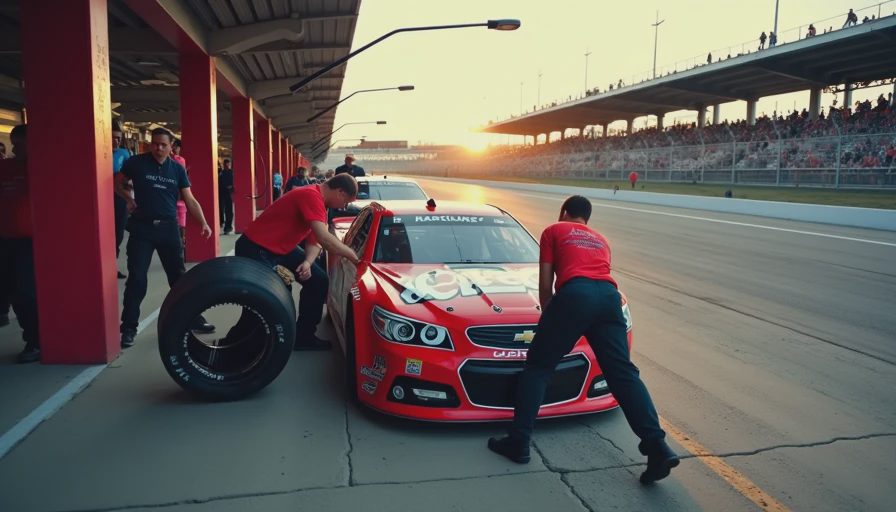
The driver's cockpit is a carefully engineered survival cell. The seat is custom-molded to the driver's body, often made of carbon fiber, and bolted directly to the chassis with six-point harnesses that keep the driver locked in place. A window net on the driver's side prevents the arm from flailing out during a crash or from debris entering. The steering wheel is quick-release and collapsible—the column is designed to crush under load, reducing the force transmitted to the driver's chest. These elements work together as a system of NASCAR safety measures that contain the driver and minimize injury from secondary impacts. In a hard hit, the seat and belts prevent the body from moving excessively, while the steering column and net manage the space around the driver.
Fuel Cell and Fire Suppression Systems
Fire is one of the greatest risks in racing. NASCAR's fuel cells are rubber bladders housed in a steel container, designed to deform without rupturing. They replaced the old metal tanks that could split open. Onboard fire suppression systems—activated by the driver or an official—spray a chemical extinguisher into the cockpit and engine bay. These systems are tested regularly and are a mandatory part of NASCAR safety measures. Since their widespread adoption, fires that do occur are often quickly contained, giving drivers time to exit. The fuel cell technology has trickled down to some street-performance vehicles and even military fuel tanks.
Data and Future: What's Next for NASCAR Safety Measures?
The Next Gen car, introduced in 2022, takes safety further. Its chassis is stiffer, with a rear clip that can absorb more energy in a rear impact. The underwing is designed to prevent the car from launching into the air—a lesson from the 2015 Daytona crash that sent Kyle Larson airborne. Data from onboard accelerometers and telemetry feeds into a database that engineers use to simulate new crash scenarios. NASCAR safety measures are now a continuous cycle of data collection, analysis, and rule changes. The same process that improved consumer vehicle safety during my NHTSA career is happening in racing. As a driver, you can take away one lesson: energy management saves lives. Whether it's a race car or your own sedan, the physics are the same. Here's what the data shows. Here's what owners should do: pay attention to your own vehicle's safety features—seat belts, airbags, and crumple zones. They were built on the same foundation as the harness and the HANS device.




No notes on this sheet yet.