This Toyota Crown review takes a different route than the typical enthusiast blog. I spent fifteen years inside NHTSA's Office of Defects Investigation, so I read a car's safety story before I care about its zero-to-sixty time. The Crown is Toyota's most unusual sedan in a generation — a raised, all-wheel-drive liftback that sits between the Camry and the RAV4. Its safety story is genuinely different from anything else in the showroom. Here is the overview, the data, and what owners should actually do.
Why This Toyota Crown Review Reads Differently
Most reviews open with "how does it drive?" This one opens with "what happens when the driver makes a mistake?" Fifteen years of reading crash reports teaches you that safety is not a single star rating. It is the sum of small decisions: where the door beams sit, how the hood line meets the A-pillar, and how the car behaves when the tires lose grip on wet pavement.
The Crown's seating position raises you several inches above a typical Camry. That extra height improves forward visibility and lifts the side sills so the door structure aligns better with the tall bumpers of the trucks and SUVs that dominate American roads. That is a real geometric advantage in a side-impact crash, not a marketing claim.
You will pay for that design. The XLE starts around $41,000, and a loaded Platinum crosses $54,000. Toyota priced the Crown as a mini-Lexus, so the real comparisons are to the Lexus ES and the Camry Hybrid, not a mainstream crossover.
Safety Technology: Standard Equipment That Actually Protects
The Crown comes with Toyota Safety Sense 3.0 as standard equipment on every trim. That package includes forward collision warning with pedestrian and cyclist detection, automatic emergency braking, lane departure alert with steering assist, and full-speed adaptive cruise control. Blind-spot monitoring and rear cross-traffic alert are also standard.
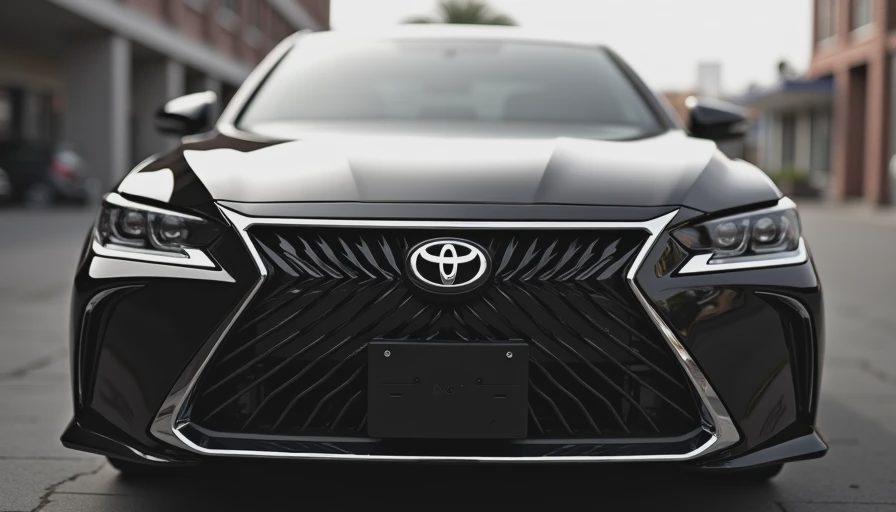
I pay attention to the word "standard." Too many automakers make you climb trim levels for basic crash-avoidance gear. Toyota put the whole suite on the base XLE, and it works without the constant false alarms you get from some rivals. The Crown also earned a five-star overall score in NHTSA's crash test program and a Top Safety Pick designation from IIHS. In any Toyota Crown review, those results matter far more than a leather seat option.
The Powertrain: An Engineer's Take on the Hybrid Setup
Two powertrains are on offer. The XLE and Limited trims carry Toyota's proven 2.5-liter four-cylinder hybrid, which delivers around 236 horsepower and EPA fuel economy estimates north of 40 mpg combined. The Platinum steps up to a 2.4-liter turbocharged hybrid system rated at 340 horsepower and roughly 400 pound-feet of torque.
A front engine paired with an electric e-axle at the rear means every Crown has all-wheel drive. The battery sits low under the floor, which lowers the center of gravity. In a panic avoidance maneuver, that weight distribution shows up as stability rather than drama. The Platinum reaches sixty miles per hour in the high five-second range. For a Toyota Crown review, the more important number is how the chassis handles all that weight in an emergency lane change. I would not buy it for the drag strip. I would buy it because the low-slung battery and long wheelbase make the ride calmer at highway speeds, and a calmer driver is a safer driver.
What Owners Report: Complaints, Recalls, and Patterns
A thorough Toyota Crown review has to look at the complaint file, not the press kit. Searching NHTSA's complaint database, the pattern is reassuring compared with many first-year models. Early 2023 cars generated a modest number of owner complaints, mostly about slow infotainment boot times, wireless CarPlay dropouts, and the sensitivity of the lane-keeping assist. I did not see a steady stream of transmission failures or battery deaths.
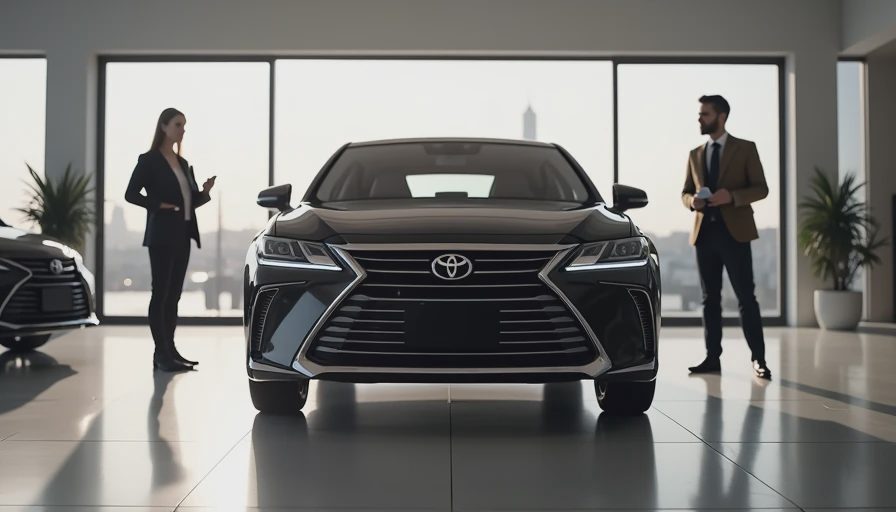
The recall history is short as of this writing, with no structural or airbag-related campaign resembling the big defects of the past decade. That could change, which is why every owner should make the VIN check a habit. The government's recall lookup is the single most underused safety tool in America.
What Owners Should Do: Three Steps This Week
Here is the action plan, straight from the checklist I used on the job.
First, pull your Vehicle Identification Number and run it through the NHTSA recall lookup at nhtsa.gov/recalls. A five-minute check tells you whether your car has an unrepaired safety recall, and dealerships fix most open recalls at no charge.
Second, know your hybrid battery coverage. Toyota covers the hybrid battery for eight years or 100,000 miles under federal rules, and for ten years or 150,000 miles in states that follow California emissions standards. That coverage transfers when the car is sold, which matters if you are buying used.
Third, if you are looking at a used Platinum, ask for the oil-change and service records for the turbocharged engine. Turbo engines live longer when the oil routine is consistent, and an independent mechanic can scan for stored codes before you sign anything.
The Bottom Line
This Toyota Crown review ends where the data points: the Crown is one of the safest and most comfortable sedans you can buy in America today. It is not the sharpest driver's car, and it is not an off-road SUV even though it looks like one. It is a well-built, all-wheel-drive commuter that treats crash-avoidance tech as standard equipment rather than an option-box afterthought.
Before you negotiate, run the VIN. Check the service records. Test the adaptive cruise on a real highway, not just the dealer lot. And if you want a plain-language weekly rundown of recalls and safety bulletins, subscribe to this newsletter — I read every Early Warning Report so you do not have to. Here's what the data shows. Here's what owners should do.




No notes on this sheet yet.