
If you're like most drivers, you probably assume that if there's an open recall on your vehicle, the manufacturer will let you know. That's not always the case. I saw it for 15 years at NHTSA: letters go to outdated addresses, secondhand owners fall through the cracks, and some recalls are quietly handled without a full public push. The only reliable way to know for sure is to learn how to find open recalls by VIN yourself. It takes two minutes, it's free, and it could save your life.
Here's the data shows that roughly one in four vehicles on the road has an unrepaired recall. That's millions of cars with known safety defects that no one has fixed. Whether you own the car or you're buying a used one, running a VIN check should be as automatic as checking the oil. Let me walk you through the exact process.
The Official NHTSA VIN Lookup Tool
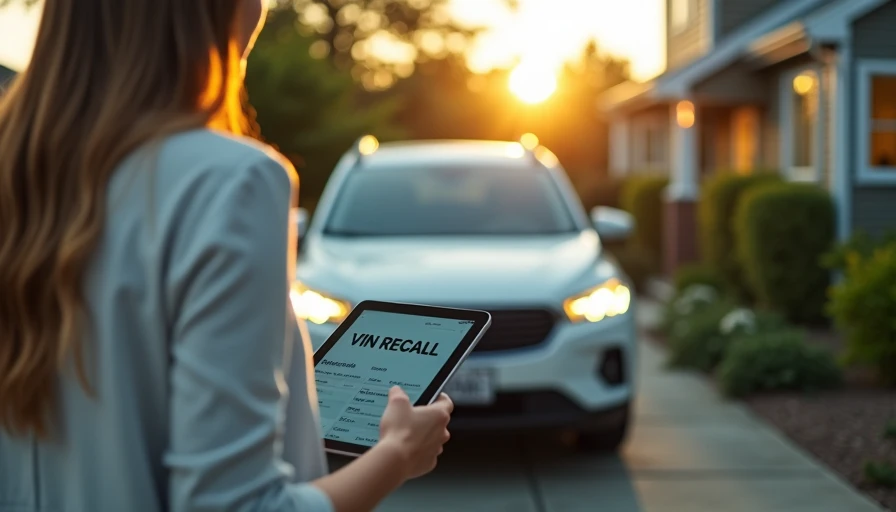
The NHTSA recall website — nhtsa.gov/recalls — is the only government-authorized database for open recalls. It pulls directly from the manufacturers' data, which they're required by law to report. Here's how to use it:
- Go to nhtsa.gov/recalls.
- Enter your 17-character VIN. It's on the lower-left corner of your windshield or on your vehicle registration.
- Click "Search." The system will check against all active recall campaigns.
- Read the results: It will list any open recalls, including the manufacturer's recall number, NHTSA campaign number, a summary of the defect, the risk, and the remedy.
- If no recalls are found, it will say so. But remember: recalls can be issued later, so check periodically.
The search is instant and you don't need to provide any personal information. I've run thousands of VINs through this tool. It's accurate as of the moment you search.

Why You Shouldn't Rely on Dealerships Alone
Dealerships are supposed to inform owners when a vehicle comes in for service, but they're not required to proactively contact every owner of every vehicle they've ever sold. And if you bought the car used, the original manufacturer's data may not have your contact info at all. I've seen cases where a dealer told a customer "no open recalls" — only for me to check the same VIN on NHTSA's site and find two. The difference? The dealer's internal system wasn't updated. NHTSA's database is. That's why knowing how to find open recalls by VIN directly is critical.
Moreover, if you're shopping for a used car, a VIN check should be part of your pre-purchase inspection. Many private sellers will tell you "all recalls are done," but the only way to verify is to run the VIN. Don't take their word. Take the two minutes.
What to Do If You Find an Open Recall
If the search reveals an open recall, the law says the repair must be performed free of charge. Here's what to do:
- Contact an authorized dealership for your vehicle's make. You can call or schedule online.
- Provide your VIN so they can confirm the recall parts availability.
- Schedule the repair. Some recalls take an hour, others require a loaner vehicle. The dealership must provide one if the repair takes longer than a day.
- If the dealership gives you a hard time — which I've seen happen — contact NHTSA's Vehicle Safety Hotline at 1-888-327-4236. They can escalate.
Remember: A recall repair does not expire. Even if the vehicle is 20 years old, the manufacturer is still obligated to fix it for free (as long as parts are available). I once helped a woman with a 1994 minivan that had a steering defect recall first issued in 1996. She got it fixed at no cost.
Other Reliable Sources to Cross-Check
While NHTSA is the gold standard, there are a few other tools that can supplement your check:
- Manufacturer websites: Most automakers have a recall lookup on their site (e.g., ford.com/recalls). By law, their data must match NHTSA's. Use these if you want to see additional details like parts availability.
- CarFax or AutoCheck: These paid services include recall data, but they often lag behind NHTSA. I've seen discrepancies. Stick with the government database for the most current info.
- Recall notices sent by mail: If you've registered your vehicle with the manufacturer, you'll get a letter. But don't wait for it.
The bottom line: you don't need to be a mechanic or an investigator to protect yourself. Knowing how to find open recalls by VIN puts the power in your hands. It's a simple, free check that I recommend every driver do at least twice a year — once in spring, once in fall. Set a recurring reminder on your phone. Here's what the data shows: the vehicles that get their recalls fixed are the ones whose owners check. Be that owner.
No notes on this sheet yet.