Highway signs are not roadside decoration. They are a communication system designed to give drivers route information, warn about changing conditions, control traffic, and reduce the time needed to make a safe decision. After 15 years investigating vehicle safety issues, I have seen how a missed sign can become the first link in a crash sequence. Here's what the data shows. Here's what owners should do.
Most drivers recognize the large green guide signs and red stop signs. The harder cases involve temporary orange signs, electronic message boards, lane-control signals, and small regulatory signs that appear when traffic is moving at 65 or 70 mph. Reading highway signs early gives you more time to change lanes smoothly, reduce speed, or leave the roadway safely.
The Main Categories of Highway Signs
A sign's color and shape usually tell you what kind of decision is coming. Regulatory signs establish rules. Speed-limit signs, keep-right signs, no-passing signs, and truck restrictions tell you what is legally required. Warning signs generally use yellow backgrounds and black symbols to flag curves, merging traffic, steep grades, animals, pedestrian activity, or a signal ahead. Guide signs are commonly green and identify destinations, route numbers, exits, and distances.
Orange highway signs indicate temporary traffic control, often around construction, maintenance, lane shifts, or workers near moving vehicles. Brown signs point toward recreational or cultural destinations. Blue signs commonly identify services such as fuel, food, lodging, hospitals, or rest areas. A sign's appearance is useful, but its placement and wording matter just as much. A yellow advisory-speed plaque beneath a curve warning is not usually the posted legal speed limit; it is a caution about a safe speed for that feature.
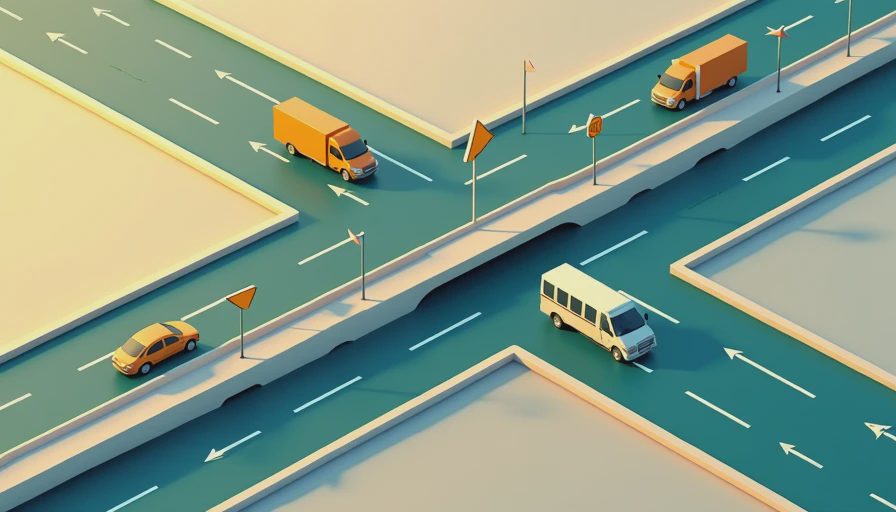
Drivers should also understand route shields. Interstate shields identify the national Interstate system, while U.S. and state route markers identify other road classifications. Odd-numbered Interstate routes generally run north and south, and even-numbered routes generally run east and west, although local geography creates exceptions. A three-digit Interstate route often connects with a larger Interstate, but the first digit can help indicate whether it is a loop, spur, or connector.
Why Timing Matters More Than Recognition
Seeing a sign is not the same as processing it. At 65 mph, a vehicle travels nearly 100 feet each second. Looking down at a phone, navigation screen, or dashboard for only a few seconds can erase the time needed to interpret an exit number and move across traffic. Highway signs are positioned to support advance decisions, but that system works only when a driver scans beyond the vehicle immediately ahead.
A practical method is to read the first sign for destination and route, the next sign for lane position, and the final sign for the actual exit or turn. If you are in the wrong lane, do not cross solid lines or make a sudden move. Continue to a safe location and let navigation recalculate. A missed exit is inconvenient. A sideswipe, abrupt braking event, or collision with a barrier can produce injuries, property damage, and an insurance claim that lasts for years.
When an electronic sign displays a reduced speed, lane closure, crash warning, or weather alert, treat it as current operating information even if traffic appears clear. Conditions can change between the sign and the hazard. Highway signs cannot stop a driver from speeding, but they provide the warning that makes a safer response possible.
Temporary Work Zones Deserve Extra Attention
Work-zone signs deserve more respect than their bright color suggests. A temporary pattern can move lanes toward the shoulder, eliminate a passing lane, narrow the roadway, or place opposing traffic closer together. Barrels and cones are not always the entire warning system. Look for signs describing lane shifts, ramp closures, uneven pavement, workers, flaggers, and reduced speed limits.
Do not follow the vehicle ahead through a work zone without reading for yourself. That driver may be unfamiliar with the route, distracted, or trying to beat a closing lane. Maintain a larger following distance, avoid unnecessary lane changes, and expect construction equipment to enter or leave the roadway. If a flagger is present, the flagger's instructions control traffic at that location.

A crash in a work zone can raise complicated questions about speed, lane position, visibility, and compliance with temporary controls. Take photographs only from a safe location. Capture the approach, the relevant sign, lane markings, weather, and vehicle damage. Do not stand in an active lane to obtain a better image.
Using Signs After a Collision
Highway signs can become important evidence after a crash. An adjuster, law enforcement officer, or attorney may need to know whether a warning was visible, whether a lane was closed, or whether a driver had enough notice to react. Write down the road, direction of travel, nearest exit, sign wording, weather, and approximate distance from the sign to the collision scene.
If you can safely do so, photograph signs before leaving, but never delay medical care or remain in danger for documentation. Ask witnesses whether they saw the same sign and record their contact information. Preserve dashcam footage promptly because many systems overwrite older video. Provide factual information to your insurer, including any ticket or police report, without guessing about details you did not observe.
Liability coverage generally addresses damage or injuries for which an insured driver is legally responsible. Collision coverage can address damage to the insured vehicle after a covered crash, subject to the policy deductible. A sign violation does not automatically determine every insurance decision, but it can become part of the evidence used to evaluate fault. Policy language and state rules control the final result.
A Simple Sign-Reading Routine
Before a long trip, review the route and identify major interchanges, toll points, rest areas, and likely lane changes. Set navigation before moving and use voice guidance when possible. On the road, scan two or three signs ahead, check mirrors before changing position, and leave space around vehicles that may suddenly exit.
If highway signs conflict with an outdated navigation instruction, follow the posted traffic control and reassess only after reaching a safe place. If visibility is poor, reduce speed enough to keep the roadway within your available sight distance. If a sign is damaged, blocked, or unreadable, report it to the state transportation agency or local road authority when it is safe to do so.
Highway signs work best when drivers treat them as early warnings rather than last-second commands. Read them, act smoothly, and document unusual conditions after a crash. If you own one of these vehicles, this week's task is simple: check your emergency kit, review your insurance declarations page, and make sure every regular driver understands the signs that control the roads you use most.




No notes on this sheet yet.