When I was at NHTSA, I spent countless hours reviewing automaker compliance cost per vehicle data. These numbers, buried in quarterly filings, reveal how much manufacturers spend to meet federal safety standards. That cost eventually lands on your car's sticker price. Here's what the data shows and what owners should do.
What Is Automaker Compliance Cost Per Vehicle?
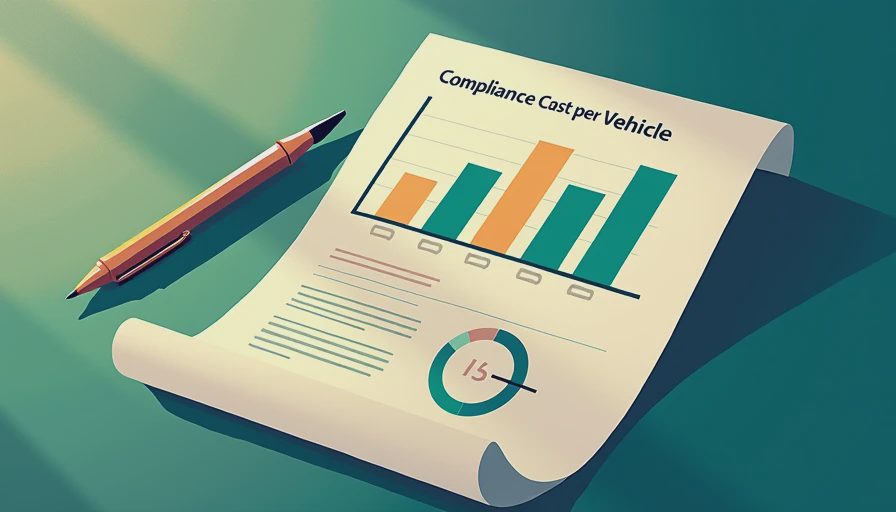
Automaker compliance cost per vehicle refers to the total expense a manufacturer incurs to ensure each vehicle it produces meets all applicable federal safety, emissions, and fuel economy regulations. These costs include engineering and testing for crashworthiness, emissions controls, recall remediation, and administrative overhead for NHTSA and EPA certification. For a typical mid-size sedan, the automaker compliance cost per vehicle can range from $500 to $2,000 depending on the complexity of the model and the number of regulatory changes in a given year.
How Compliance Costs Are Calculated
Manufacturers factor in several variables when calculating compliance costs. The number of distinct vehicle platforms a company sells directly scales the expense—more platforms require more crash tests and calibration work. Recalls are a major variable: a single large recall can add hundreds of dollars to the automaker compliance cost per vehicle across an entire model line. Luxury brands often spend more because their vehicles include advanced driver-assistance systems that require additional validation. Economy brands may have lower per-vehicle costs but can be hit harder by fleet-wide fuel economy penalties.
The Real Impact on Car Buyers
Higher compliance costs are usually passed on to consumers in the form of higher MSRPs. But there's a trade-off: the same regulations that raise production costs also make cars safer. For example, mandatory electronic stability control, which added about $150 per vehicle in 2012, has prevented thousands of rollover fatalities. Understanding the automaker compliance cost per vehicle helps a buyer see why a car with more advanced safety tech often costs more—and why that investment can pay off in reduced accident risk.
Why Compliance Costs Aren't the Enemy
Some critics argue that excessive regulation inflates car prices. The data tells a different story: compliance costs have risen modestly compared to the safety gains. Since the 1970s, highway fatalities per mile driven have dropped by over 80 percent, largely due to federal standards. The automaker compliance cost per vehicle is a small fraction of the total purchase price, and it delivers proven protection. At NHTSA, I saw firsthand how a well-designed standard—like side-impact crash requirements—forced innovation that saved lives without bankrupting the industry.
What Owners Should Do
- Check the safety ratings of any vehicle you're considering at NHTSA's SaferCar.gov.
- Look up the recall history for the specific make and model—multiple recalls may indicate poor initial compliance engineering.
- When comparing similar models, factor in the total cost of ownership, including insurance and expected repair costs for safety systems. A car with a slightly higher sticker price but better compliance and safety records often costs less in the long run.
Here's what the data shows: automaker compliance cost per vehicle is a necessary investment in your safety. Here's what owners should do: use it as a tool to make informed buying decisions, not a reason to avoid well-regulated vehicles.
_Filing number, exact range, three concrete steps: check SaferCar.gov, review recall history, compare total ownership costs. If you own a vehicle that has been part of a compliance-related recall, this week's task is to schedule the repair at your dealer._
How Compliance Costs Vary by Vehicle Type
Not every vehicle carries the same compliance burden. A small economy car like the Honda Civic typically incurs a lower compliance cost—around $500 to $800 per vehicle—because its engine and emissions systems are simpler, and crash-test requirements are less demanding for smaller vehicles. In contrast, a full-size pickup like the Ford F-150 may face compliance costs of $1,200 to $1,800 per vehicle, largely due to stricter fuel economy targets for trucks and the need to meet side-impact and roof-crush standards designed for larger, heavier vehicles. Plug-in hybrids and electric vehicles add another layer: battery safety testing, unique crash structures, and compliance with zero-emission vehicle mandates can push the per-vehicle cost to $2,000 or more. Luxury brands like Mercedes-Benz often exceed $2,500 because they integrate advanced driver-assistance systems (ADAS) requiring extensive validation. For example, Mercedes-Benz's Level 3 autonomous system, Drive Pilot, required over 1,000 hours of highway testing before NHTSA approval—a cost folded into each vehicle's price. For a 2025 Toyota Corolla, the estimated compliance cost is around $600 per vehicle, while a 2025 Tesla Model 3 may exceed $2,500 due to its unique battery and structural requirements.
**What This Means for You:**
- If you're shopping for a used car, models with higher initial compliance costs tend to have better safety equipment and may hold their resale value longer because repair parts for safety systems are standardized.
- Insurance premiums can be slightly lower on vehicles that have strong compliance records, since insurers factor in lower claims risk for models with advanced safety tech.
- When comparing two vehicles at the same price point, the one with lower regulatory overhead may offer better value because more of your money goes toward features rather than compliance costs.
To find specific compliance cost data, check NHTSA's Part 581 reports or manufacturer environmental disclosures. Some automakers include this information in their sustainability reports. Understanding these differences helps a buyer see why a base-model sedan is cheaper not only because of materials but also because the regulatory overhead is lower.





No notes on this sheet yet.