A highway sign is not decoration beside the road. It is a time-sensitive safety message that tells you what is ahead, what is prohibited, or how to reach the next destination. During my years reviewing crashes and vehicle-safety complaints, I saw the same pattern repeatedly: drivers noticed a sign but processed it too late. Understanding the system before a stressful trip gives you more time to slow down, change lanes, or stop safely.
The United States uses consistent colors, shapes, and lettering so that a driver can recognize a message before reading every word. That design matters at night, in rain, and when traffic blocks part of the sign. Here's what the data shows. Here's what owners should do: learn the visual language, scan well ahead, and never make a sudden maneuver just to obey a missed instruction.
How colors and shapes communicate danger
A red highway sign element generally signals stopping, yielding, or prohibition. The familiar red octagon means STOP, while an upside-down triangle means YIELD. These shapes are intentionally distinctive; even when snow, glare, or a damaged sign obscures the wording, the outline still carries information.
Yellow signs warn about conditions requiring attention, such as curves, merging traffic, intersections, pedestrian crossings, or changes in roadway alignment. Fluorescent yellow-green is used for some pedestrian, bicycle, and school-related warnings because it stands out more strongly against ordinary scenery. Orange signs identify temporary traffic control, including construction, lane shifts, workers, and reduced speed areas.
Green signs provide directional or route information. Blue commonly identifies services, such as fuel, food, lodging, hospitals, or roadside assistance. Brown signs point toward recreation or cultural sites. White signs usually communicate regulations, including speed limits, lane-use rules, parking restrictions, and notices tied to federal or state traffic law.
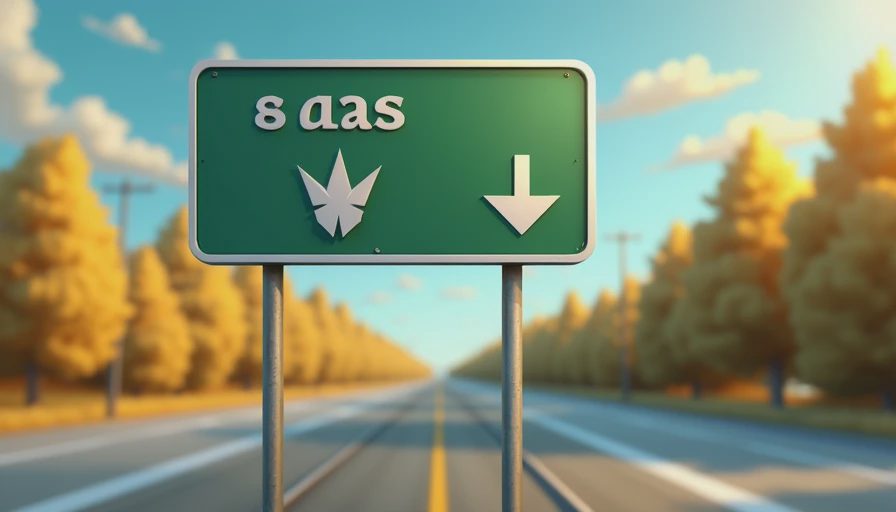
Reading a highway sign before it becomes urgent
The safest habit is to scan in layers. First, look far down the road for large guide signs, lane closures, brake lights, and unusual traffic movement. Next, read the nearest sign and identify the action it requires. Finally, check mirrors and blind spots before changing position. This sequence prevents the common mistake of staring at a sign while drifting toward another vehicle.
A highway sign often gives advance notice before a decision point, followed by a confirmation sign after the exit or interchange. If an exit is on the right, move over gradually rather than crossing several lanes at the last moment. Missing an exit is inconvenient; cutting across traffic can create a serious conflict. Navigation apps can help, but they should support—not replace—roadside signs and your own observation.
At night, avoid relying on headlights to reveal signs at the last second. Retroreflective material sends light back toward the vehicle, but rain, dirty windshields, heavy spray, and high speed reduce the useful reading distance. Keep the windshield clean, dim distracting dashboard displays, and leave enough following distance to respond when traffic slows.
Interstate shields, route markers, and exits
Route markers answer a different question from destination signs. An Interstate shield identifies the roadway, while a U.S. Route or state-route marker identifies another numbered system. Even-numbered Interstate routes generally run east-west, and odd-numbered routes generally run north-south. The numbering pattern is useful for orientation, but it is not a substitute for checking the complete route and direction.
Exit numbering usually follows mile markers on a particular Interstate, although local roadway history can create exceptions. An exit number can therefore tell you how far ahead a turn is and help confirm whether your navigation instructions make sense. A sign naming two destinations may indicate that lanes will separate shortly, so read the overhead sign early and choose the lane matching your actual route.
When a sign lists an exit-only lane, treat that information as an immediate lane-use instruction. Continuing straight from that lane may be impossible or illegal. Conversely, do not enter an exit lane simply because traffic is moving faster there unless your route requires it. The short-term advantage is not worth a forced merge later.
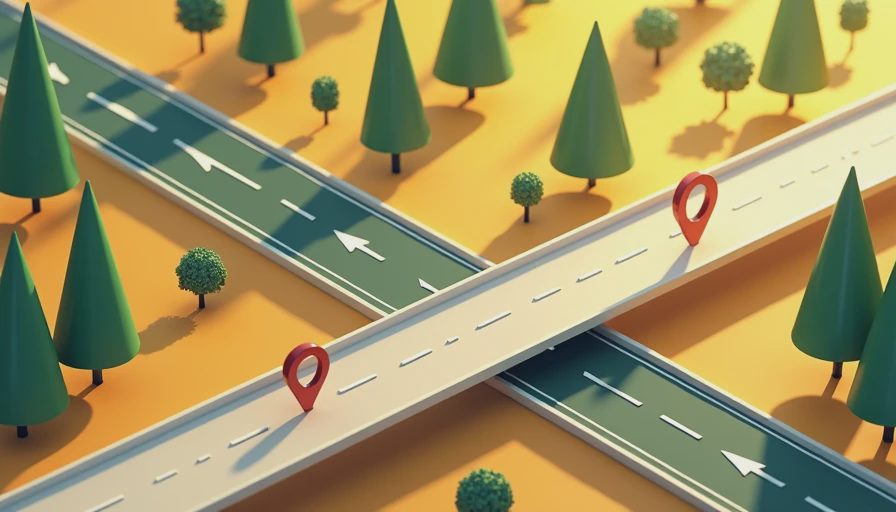
Work zones require a different driving plan
An orange highway sign means conditions may change from one trip to the next. Barrels, cones, temporary pavement markings, flaggers, portable signals, and lane shifts can alter the normal roadway. Follow the temporary signs even when the permanent markings or familiar route seem to suggest something else. Work-zone layouts can change after a crew moves equipment or opens a new lane.
Reduce speed before entering the work area, not beside the first worker or cone. Leave extra space around trucks and construction equipment, and expect stopped traffic after a crest or curve. Do not drive through a closed lane because it appears empty. A closed lane may contain workers, a drop-off, loose pavement, or vehicles entering from a hidden access point.
If an emergency vehicle, road crew, or flagger is present, concentrate on the person giving directions rather than trying to interpret several messages at once. State rules differ on roadside yielding and move-over requirements, so learn the rule where you drive. The practical safety principle is consistent: slow down, create space, and avoid distractions.
What to do when a sign is confusing or damaged
A missing or obscured highway sign creates uncertainty, but it does not justify an abrupt decision. Maintain your lane, reduce speed smoothly, and follow the last clear instruction. If you miss a turn, continue to a safe location before rerouting. Never stop on an active shoulder to study a phone screen unless an emergency requires it.
Passengers can read maps, but the driver should keep attention on traffic. If you are alone, use voice guidance before moving and let the system recalculate after you pass the turn. Photographing a damaged sign is not safe while driving; a passenger can document it, or you can report the location after parking. Include the route, direction of travel, nearest exit, and the problem you observed.
A highway sign that is hidden by vegetation, graffiti, collision damage, or poor lighting can affect more than one driver. Reporting a problem to the responsible transportation agency gives maintenance crews usable information. Do not assume another motorist has already called.
A practical sign-reading checklist
Before a long drive, confirm your route, likely exits, rest stops, and alternate destination. During the trip, keep both hands available, scan beyond the vehicle directly ahead, and watch for sign colors before trying to read lettering. If traffic, weather, or fatigue reduces your ability to process information, take a legal break rather than pushing through.
When approaching an interchange, identify the exit side, check the lane arrows, and make one deliberate lane change at a time. After an exit, look for a confirmation highway sign or route marker. If the route does not match your plan, pull into a safe parking area and correct it there.
The system works best when drivers treat signs as advance warnings rather than last-second instructions. Read early, respond smoothly, and accept a missed turn as a small inconvenience. A few extra minutes is a reasonable price for avoiding a sudden lane crossing, hard braking, or collision.



No notes on this sheet yet.