The Toyota Camry is a midsize sedan with a long sales history, so its safety record cannot be reduced to one rating or one recall list. If you own one or are considering a used example, start with its 17-character vehicle identification number, or VIN. Check for open recalls, look up crash-test results for the exact model year, and verify the safety equipment on the individual car. Those steps tell you more than a reputation for dependability.
For shoppers, a Camry is a sensible sedan to compare with the Honda Accord and Hyundai Sonata. All three have been offered across multiple model years, but equipment and crash-test performance vary by year and configuration. The right choice is the specific car with a sound inspection, a documented history, and safety features you understand—not simply the badge with the strongest reputation.
Start with the VIN, not a model-wide search
A Toyota Camry recall can apply to a particular production period or configuration, not every car bearing the name. Go to NHTSA.gov/recalls and enter the VIN from the dashboard, registration, or driver's door area. Also check Toyota's recall lookup. Save or print the results, including the date you searched.
An open recall means the manufacturer has identified a safety issue affecting that vehicle and records do not show the remedy as completed. Read the description for the hazard, warning signs, and remedy status. A listed repair may be available immediately, or the notice may say the remedy is still being developed. Contact a Toyota dealer with the VIN to confirm parts availability and arrange service.
No open recall is good news, but it is not proof that a car is defect-free. A defect may not have been identified, a complaint may never become a recall, and a database record may not reflect a repair immediately. If a seller says a recall was fixed, ask for the repair order and check the VIN again after the record has had time to update.

Read crash ratings for the exact car
NHTSA's five-star safety ratings and the Insurance Institute for Highway Safety's evaluations answer related but different questions. Search both organizations by model year and body style. Pay attention to the individual test results and the equipment the rating applies to; a favorable overall result does not mean every seating position or crash scenario performed identically.
IIHS ratings can also depend on headlights or optional equipment. When comparing two Toyota Camry listings from the same year, verify the actual headlights and driver-assistance equipment rather than assuming the window sticker from another trim applies. A dealer can help identify factory equipment from the VIN, and the owner's manual can explain how the installed systems operate.
For a family car, bring the child seat to the inspection. Check the manual for approved seating positions and lower-anchor or seat-belt installation instructions. Install the seat securely, then check whether the front occupants have enough room to sit properly. A strong crash rating cannot compensate for a seat that is installed incorrectly.
Know what driver assistance can and cannot do
Depending on model year and equipment, a Toyota Camry may have features such as automatic emergency braking, adaptive cruise control, lane-departure alerts, or blind-spot monitoring. Do not assume a feature is standard on an older car because it appears on a newer one. Ask the seller to demonstrate the controls and disclose any warning lights or disabled functions.
These systems assist an attentive driver; they do not make the car self-driving. Automatic braking may not prevent every collision, and performance depends on conditions, system design, and speed. Lane-related alerts may struggle when markings are obscured. Read the manual for the car in front of you, including the limitations and instructions for keeping sensors and cameras unobstructed.
After windshield replacement or collision repairs, ask for documentation showing whether camera or sensor calibration was required and completed. A warning light is reason to investigate, but the absence of one is not a substitute for proper repair records. Have a qualified shop assess any uncertainty before relying on the system.
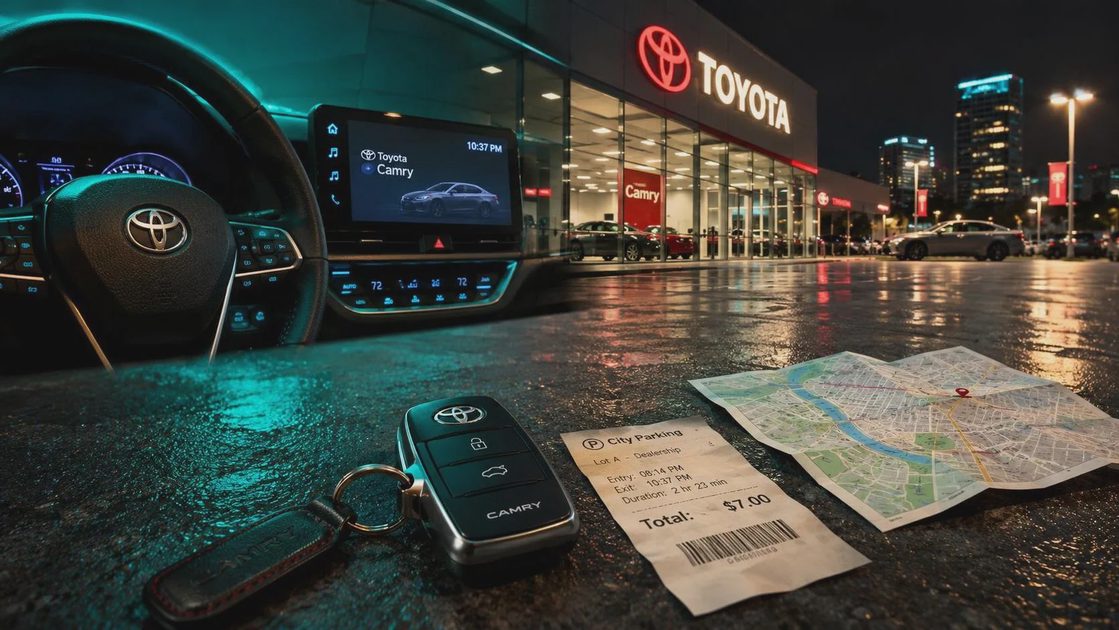
Inspect a used car before agreeing to buy
A vehicle history report is useful for identifying reported crashes, title problems, and ownership changes, but it can miss events. Compare the VIN on the car with the title and listing, then pay an independent mechanic to inspect the vehicle before purchase. Ask for a written report covering structural repairs, tires, brakes, suspension, fluid leaks, and diagnostic trouble codes.
On a used Toyota Camry, I would pay particular attention to mismatched body panels, uneven gaps, and signs of repair around the windshield and sensor locations. These do not automatically prove a dangerous repair. They are reasons to request the repair documentation and have the shop examine the work. Check that every seat belt latches and retracts, and ask the mechanic to investigate an airbag warning light.
If the vehicle is a hybrid, ask the shop whether it is equipped to inspect hybrid systems. Review maintenance records and any warranty terms that apply to that specific car; coverage can depend on model year, mileage, location, and other conditions. Do not accept a verbal promise about remaining coverage without documentation.
What owners should do when a warning appears
First, check the VIN for open recalls and read the notice itself. Record the NHTSA campaign number, the affected component, and the stated risk if a recall applies. Do not assume a similarly worded internet post describes your vehicle.
Second, contact a dealer for the remedy and ask whether the car can be driven while waiting for parts. Follow any specific parking or driving instructions in the recall notice. Safety recall repairs are generally performed without charge, subject to applicable law and recall terms; ask the dealer to explain any proposed charge before authorizing work.
Third, document a suspected safety defect even if no recall appears. Record the date, mileage, symptoms, warning messages, and repair visits. Submit a complaint at NHTSA.gov with the VIN and a factual account. A complaint is not proof of a widespread defect, but it creates a report investigators can evaluate alongside others.
If a warning indicates an immediate danger, move to a safe location and seek qualified help rather than continuing to drive. Here's what the data shows. Here's what owners should do: verify the individual vehicle, preserve the paperwork, and act on the actual notice—not a reassuring sales pitch or an alarming headline.



No notes on this sheet yet.